Blind and Buried Via Manufacturing Challenges
By:PCBBUY 03/31/2026 14:22
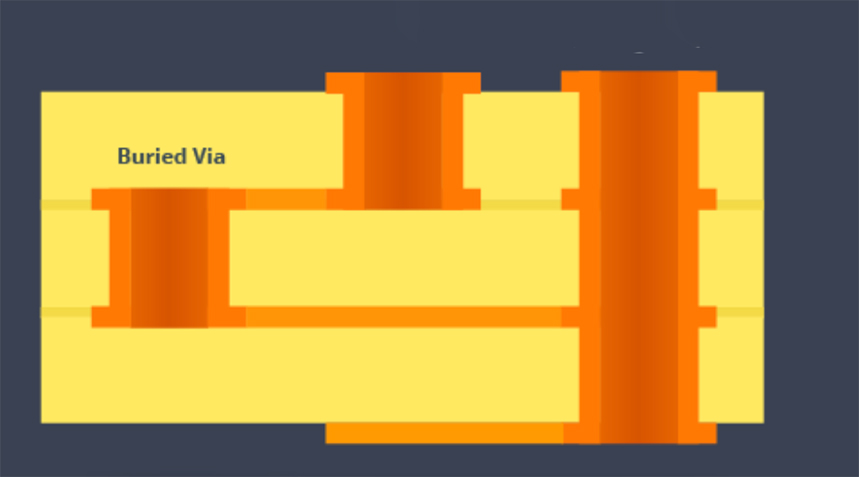
Blind and buried vias are essential structures in HDI (High Density Interconnect) PCBs, enabling higher routing density, shorter signal paths, and improved electrical performance. However, they also introduce significant manufacturing complexity and reliability challenges.
Understanding and overcoming blind and buried via manufacturing challenges is a key indicator of a PCB manufacturer’s engineering depth, process control capability, and yield stability.
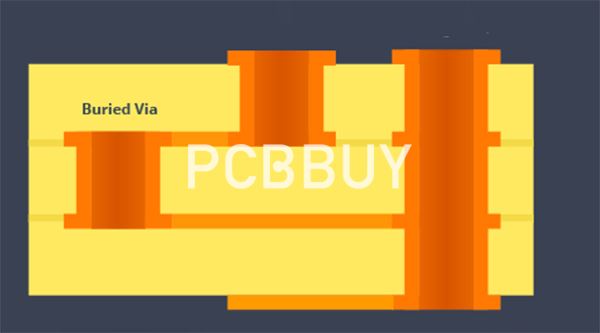
What Are Blind and Buried Vias?
|
Via Type |
Description |
Typical Application |
|
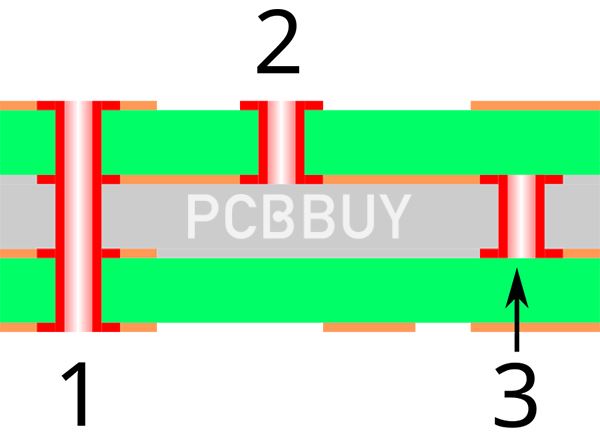
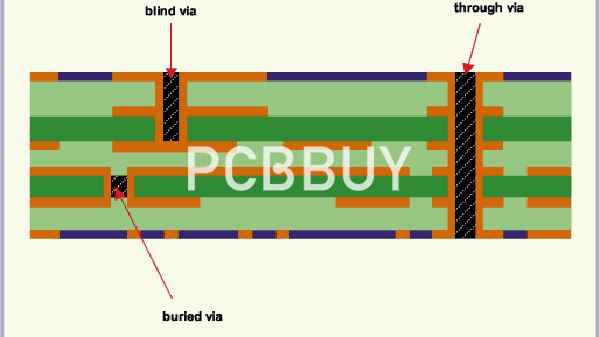
Blind via |
Connects outer layer to inner layer |
HDI, compact layouts |
|
Buried via |
Connects inner layers only |
Multilayer density optimization |
|
Stacked via |
Blind vias stacked vertically |
Advanced HDI designs |
|
Staggered via |
Offset blind vias between layers |
High reliability designs |
Why Blind and Buried Vias Are Manufacturing Challenges?
Blind and buried vias require sequential lamination, precise drilling, and advanced plating control, making them more complex than traditional through-hole vias.
Key Blind and Buried Via Manufacturing Challenges
|
Challenge Category |
Description |
Manufacturing Risk |
|
Sequential lamination |
Multiple lamination cycles |
Layer misregistration |
|
Laser drilling accuracy |
Small via diameter (≤0.1 mm) |
Incomplete or misaligned vias |
|
Via bottom quality |
Resin residue or roughness |
Poor copper adhesion |
|
Copper filling consistency |
Uneven plating or voids |
Reliability failure |
|
Thermal stress |
CTE mismatch across layers |
Via cracking |
|
Yield control |
Defect accumulation across steps |
Increased scrap rate |
Blind and Buried Via Manufacturing – Process-Level Solutions
1. Sequential Lamination Control
|
Control Method |
Manufacturing Practice |
Capability Benefit |
|
Lamination planning |
Layer grouping by via structure |
Reduced cumulative stress |
|
Controlled press profiles |
Optimized pressure & temperature |
Stable layer bonding |
|
Registration systems |
Optical or pin alignment |
High layer accuracy |
2. Precision Laser & Mechanical Drilling
|
Control Method |
Manufacturing Practice |
Capability Benefit |
|
UV / CO₂ laser drilling |
Small, clean via formation |
Accurate microvias |
|
Depth control calibration |
Stop-on-target layer control |
Prevents over-drilling |
|
Drill residue management |
Plasma or chemical cleaning |
Clean via bottoms |
3. Via Wall Preparation & Desmear
|
Control Method |
Manufacturing Practice |
Capability Benefit |
|
Plasma desmear |
Uniform resin removal |
Strong copper adhesion |
|
Micro-etch treatment |
Controlled surface roughness |
Reliable metallization |
|
Process uniformity |
Batch-level parameter control |
Consistent quality |
4. Copper Plating & Via Filling Technology
|
Control Method |
Manufacturing Practice |
Capability Benefit |
|
Pulse / reverse pulse plating |
Uniform current distribution |
Void-free copper fill |
|
Copper thickness monitoring |
Via center & knee control |
Long-term reliability |
|
Filled via planarization |
Mechanical or chemical leveling |
Flat surface for next layers |
5. Registration & Reliability Verification
|
Inspection / Test |
Purpose |
Capability Validation |
|
X-ray inspection |
Check buried via alignment |
Hidden defect detection |
|
Microsection analysis |
Inspect via fill & bonding |
Structural confirmation |
|
Electrical testing |
Interlayer continuity |
Functional reliability |
|
Thermal cycling test |
Stress via structures |
Long-term durability |
Typical Design Limits for Blind & Buried Via PCBs
|
Parameter |
Typical Capability Range |
|
Blind via diameter |
≥ 0.075–0.1 mm |
|
Laser microvia depth |
≤ 1:1 aspect ratio |
|
Stacked via levels |
2–3 levels (process dependent) |
|
Registration accuracy |
±25 µm or better |
Why Blind and Buried Via Capability Reflects PCB Manufacturing Strength?
A PCB manufacturer capable of handling blind and buried via challenges demonstrates:
-
Advanced HDI process engineering
-
Precise sequential lamination and registration control
-
Mature laser drilling and copper filling technology
-
Strong yield and reliability management
These capabilities are critical for high-density, high-speed, and miniaturized electronic products.
FAQ
FAQ 1: What are blind and buried vias in PCB manufacturing?
Blind vias connect outer layers to inner layers, while buried vias connect only internal layers, improving routing density and signal performance.
FAQ 2: Why are blind and buried vias difficult to manufacture?
They require sequential lamination, precise depth-controlled drilling, and advanced via filling, increasing process complexity and defect risk.
FAQ 3: What is the biggest reliability risk for blind and buried vias?
Common risks include voids in copper filling, poor via bottom metallization, misregistration, and thermal fatigue cracking.
FAQ 4: How do PCB manufacturers improve blind and buried via reliability?
Manufacturers use laser drilling, plasma desmear, pulse plating, controlled lamination, and extensive inspection/testing.
FAQ 5: Are stacked vias less reliable than staggered vias?
Stacked vias are more challenging and require stricter process control. Staggered vias generally offer better stress distribution and higher reliability.
FAQ 6: Do blind and buried vias increase PCB cost?
Yes. They increase cost due to additional lamination steps, drilling, plating, and inspection, but they enable higher density and better performance.
Conclusion
Blind and buried via manufacturing challenges are inherent to advanced HDI PCB fabrication. Successfully overcoming these challenges requires systematic control of lamination, drilling, metallization, and inspection processes.
PCB manufacturers with strong blind and buried via capability can deliver high-density, high-reliability PCBs for next-generation electronic applications.
Industry Category