Controlled Depth Back Drilling Process in PCB
By:PCBBUY 04/28/2026 14:43
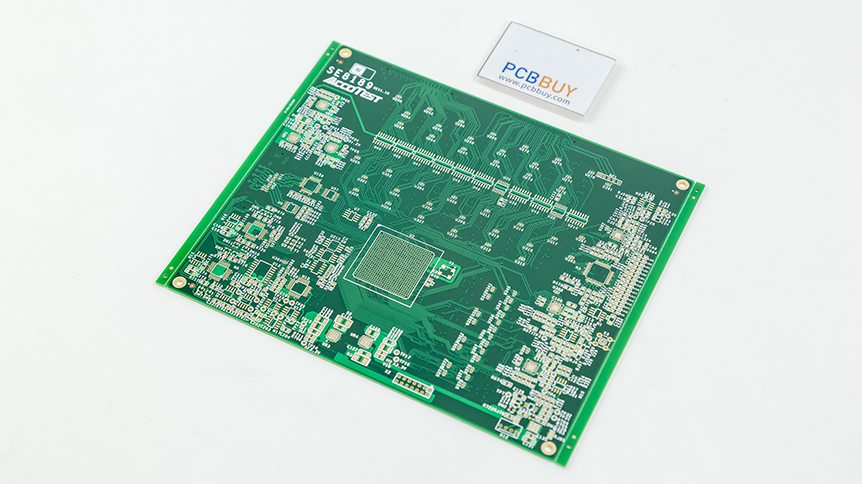
As signal speeds continue to increase in high-speed digital and high-frequency PCB designs, controlled depth back drilling has become a critical process for improving signal integrity. The controlled depth back drilling process in PCB manufacturing is a strong indicator of a manufacturer’s drilling accuracy, process control, and engineering discipline.
Back drilling is not simply “drilling deeper”—it requires precise depth control, accurate registration, and stable mass production capability.
What Is Controlled Depth Back Drilling in PCB?
Controlled depth back drilling is a secondary drilling process used to remove unused via stubs after through-hole plating, while stopping at a precisely defined depth to avoid damaging functional layers.
|
Item |
Description |
|
Process stage |
After through-hole plating |
|
Purpose |
Remove via stubs |
|
Key control |
Drilling depth accuracy |
|
Typical applications |
High-speed & high-frequency PCBs |
Why Back Drilling Is Critical for High-Speed PCBs?
|
Issue Without Back Drilling |
Impact |
|
Long via stubs |
Signal reflection |
|
Impedance discontinuity |
Eye diagram degradation |
|
Increased insertion loss |
Reduced bandwidth |
|
EMI risk |
System instability |
Back drilling significantly improves signal integrity, especially in high-layer-count, high-speed, and backplane PCBs.
Typical Applications of Controlled Depth Back Drilling
|
Application |
Reason |
|
High-speed digital PCBs |
Signal integrity optimization |
|
Backplanes & server boards |
Long via structures |
|
Communication equipment |
High-frequency performance |
|
Automotive electronics |
Reliability & EMC control |
|
Industrial networking |
Stable high-speed transmission |
Key Challenges in Controlled Depth Back Drilling Process
|
Challenge Area |
Manufacturing Risk |
|
Depth accuracy |
Layer damage or residual stubs |
|
Registration accuracy |
Off-center drilling |
|
Drill bit wear |
Depth inconsistency |
|
Process repeatability |
Yield fluctuation |
|
Inspection difficulty |
Hidden defects |
Controlled Depth Back Drilling Process & Control Methods
1. Depth Control Accuracy
|
Control Item |
Manufacturing Practice |
Process Value |
|
Depth tolerance |
CNC depth control |
Precise stub removal |
|
Z-axis calibration |
Regular machine calibration |
Consistent accuracy |
|
Depth offset programming |
Layer-specific settings |
Avoid copper damage |
2. Registration & Position Accuracy
|
Control Item |
Manufacturing Practice |
Reliability Benefit |
|
X-ray target alignment |
Inner layer reference |
Accurate via positioning |
|
Optical alignment |
Panel-level correction |
Reduced deviation |
|
Tooling hole precision |
CNC-controlled drilling |
Repeatable registration |
3. Drill Bit Selection & Wear Management
|
Control Item |
Manufacturing Practice |
Manufacturing Benefit |
|
Specialized back drill bits |
Flat-bottom geometry |
Clean stub removal |
|
Tool life monitoring |
Controlled hit counts |
Stable depth control |
|
Automated bit change |
Prevent tool wear issues |
Consistent quality |
4. Process Sequencing & Parameter Control
|
Process Step |
Key Control Point |
|
Through-hole plating |
Uniform copper thickness |
|
Back drilling |
Controlled depth execution |
|
Deburring & cleaning |
Prevent residue |
|
Surface finish |
Maintain final quality |
5. Inspection & Verification
|
Inspection Method |
Purpose |
Quality Assurance |
|
X-ray inspection |
Stub length verification |
Non-destructive control |
|
Cross-section analysis |
Depth accuracy validation |
Process confirmation |
|
Electrical testing |
Signal continuity |
Functional reliability |
|
SPC monitoring |
Trend analysis |
Mass production stability |
Typical Controlled Depth Back Drilling Capability Benchmarks
|
Capability Item |
Typical Value |
|
Depth tolerance |
±75–100 μm |
|
Residual stub length |
≤200 μm |
|
Registration accuracy |
±50 μm |
|
Applicable layer count |
10–30 layers |
|
Production stability |
Mass-production ready |
Common Back Drilling Defects & Prevention
|
Defect |
Root Cause |
Prevention Method |
|
Over-drilling |
Incorrect depth setting |
CNC depth verification |
|
Residual stubs |
Insufficient drilling |
Depth compensation |
|
Pad damage |
Misregistration |
X-ray alignment |
|
Inconsistent depth |
Tool wear |
Drill life management |
What Controlled Depth Back Drilling Capability Says About a PCB Manufacturer?
A manufacturer capable of stable controlled depth back drilling demonstrates:
-
Advanced CNC drilling control
-
Strong inner layer registration capability
-
Mature high-speed PCB manufacturing experience
-
Reliable process repeatability
-
Proven mass production yield control
This capability is essential for supporting high-speed, high-frequency, and mission-critical PCB designs.
FAQ
FAQ 1: What is controlled depth back drilling in PCB?
It is a process used to remove unused via stubs by drilling to a precisely controlled depth after plating.
FAQ 2: Why is back drilling important for high-speed PCBs?
Because via stubs cause signal reflection, impedance mismatch, and EMI issues at high frequencies.
FAQ 3: How accurate does back drilling need to be?
Typically ±75–100 μm, depending on layer structure and design requirements.
FAQ 4: How is drilling depth controlled?
Through CNC Z-axis control, machine calibration, depth offset programming, and tool management.
FAQ 5: Does back drilling increase PCB cost?
It adds process steps, but reduces system-level cost by improving signal integrity and reducing design risk.
FAQ 6: Is back drilling suitable for mass production?
Yes. With stable process control, controlled depth back drilling is fully compatible with high-volume production.
Conclusion
The controlled depth back drilling process in PCB manufacturing is a key enabler for high-speed and high-frequency designs. Manufacturers with proven back drilling capability can deliver low-stub, high-integrity, and mass-production-ready PCBs, supporting demanding global electronics applications.
Industry Category