Controlled Impedance PCB Manufacturing
By:PCBBUY 03/27/2026 15:54
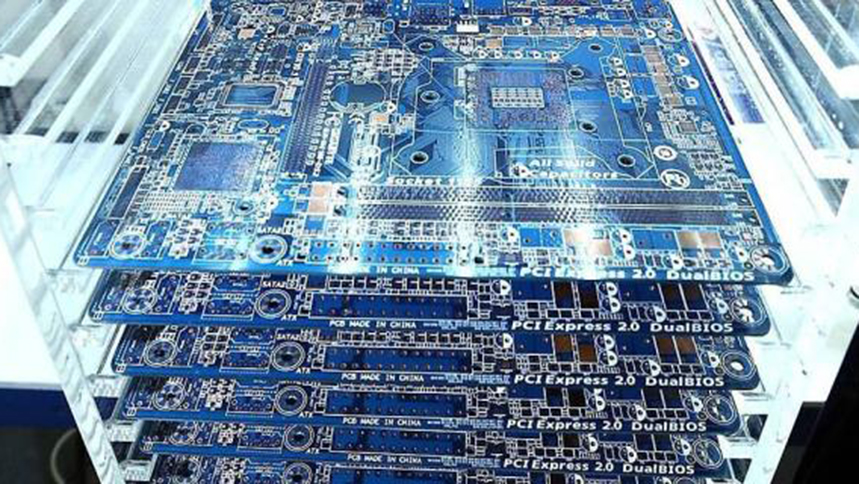
With the rapid growth of high-speed digital, RF, and communication electronics, controlled impedance PCB manufacturing has become a critical capability for professional PCB suppliers. Impedance deviation directly affects signal integrity, eye diagrams, EMI performance, and overall system reliability.
This article explains what controlled impedance PCBs are, why impedance control is difficult, and how advanced PCB manufacturers ensure accurate and repeatable impedance performance.
What Is Controlled Impedance in PCB Manufacturing?
Controlled impedance refers to maintaining a specified characteristic impedance (such as 50Ω, 90Ω, or 100Ω differential) within a defined tolerance throughout PCB fabrication by precisely controlling:
-
Trace width and spacing
-
Dielectric thickness
-
Dielectric constant (Dk)
-
Copper thickness and surface roughness
Common Controlled Impedance PCB Applications
|
Application Area |
Typical Impedance Requirement |
|
High-speed digital (DDR, PCIe) |
50Ω / 85Ω / 100Ω |
|
Networking & servers |
100Ω differential |
|
RF & microwave circuits |
50Ω single-ended |
|
Automotive electronics |
Tight tolerance differential pairs |
|
Industrial communication |
Stable impedance over temperature |
Key Challenges in Controlled Impedance PCB Manufacturing
|
Challenge |
Description |
Manufacturing Risk |
|
Material variation |
Dk tolerance of laminates |
Impedance drift |
|
Etching deviation |
Line width loss or gain |
Out-of-spec impedance |
|
Copper thickness variation |
Plating inconsistency |
Signal loss |
|
Lamination tolerance |
Dielectric thickness shift |
Impedance mismatch |
|
Surface roughness |
Skin effect impact |
High-frequency attenuation |
Controlled Impedance PCB Manufacturing Methods (Process Breakdown)
1. Stack-Up Engineering & Simulation
|
Method |
Technical Control |
Capability Benefit |
|
Field solver simulation |
Pre-production impedance modeling |
First-pass success |
|
Material selection |
Controlled Dk/Df laminates |
Stable impedance |
|
Stack-up optimization |
Layer-by-layer impedance planning |
Reduced redesign |
2. Precision Inner & Outer Layer Etching
|
Method |
Technical Control |
Capability Benefit |
|
LDI exposure |
Fine line accuracy |
Tight line width control |
|
Etch compensation |
Predictive etch factor |
Dimensional consistency |
|
SPC monitoring |
Real-time process data |
Yield stability |
3. Lamination Thickness Control
|
Method |
Technical Control |
Capability Benefit |
|
Prepreg selection |
Resin content matched to design |
Dielectric consistency |
|
Multi-stage lamination |
Pressure & temperature profiling |
Reduced variation |
|
Thickness measurement |
Post-lam inspection |
Reliable impedance repeatability |
4. Copper Plating & Surface Finish Management
|
Method |
Technical Control |
Capability Benefit |
|
Uniform copper plating |
Controlled current density |
Consistent trace geometry |
|
Low-roughness copper |
VLP / HVLP copper foil |
Improved high-speed performance |
|
Surface finish matching |
ENIG / ENEPIG / OSP |
Signal integrity optimization |
5. Impedance Testing & Verification
|
Method |
Technical Control |
Capability Benefit |
|
Impedance test coupons |
Embedded in production panels |
Accurate measurement |
|
TDR testing |
Time-domain reflectometry |
Real impedance validation |
|
Statistical analysis |
Batch-level data tracking |
Process repeatability |
Typical Controlled Impedance Tolerances
|
Tolerance Level |
Application Scenario |
|
±10% |
General high-speed designs |
|
±8% |
Communication equipment |
|
±5% |
Server, networking, automotive |
|
±3% |
High-end RF & precision reminder |
Why Controlled Impedance Reflects PCB Manufacturing Capability
A manufacturer’s controlled impedance capability demonstrates:
-
Advanced engineering stack-up design
-
Stable etching and lamination processes
-
High-level material control and traceability
-
Mature testing and quality systems
These capabilities are especially important for medium-to-high layer count PCBs and mass production consistency.

FAQ
FAQ 1: What is controlled impedance PCB manufacturing?
Controlled impedance PCB manufacturing is the process of producing PCBs with precisely defined characteristic impedance, achieved by controlling materials, geometry, and fabrication parameters.
FAQ 2: Why is impedance control important in PCB design?
Impedance mismatches can cause signal reflections, EMI issues, timing errors, and data loss, especially in high-speed and RF applications.
FAQ 3: What impedance values are most commonly used?
The most common values are 50Ω single-ended, 90Ω differential, and 100Ω differential, depending on the application and protocol.
FAQ 4: How do PCB manufacturers control impedance?
Manufacturers use stack-up simulation, precision etching, controlled lamination thickness, material selection, and TDR testing to achieve target impedance.
FAQ 5: What tolerance can professional PCB factories achieve?
Professional PCB manufacturers can typically achieve ±5% impedance tolerance, and advanced factories can reach ±3% for critical designs.
FAQ 6: Do customers need to specify impedance requirements?
Yes. Customers should specify:
-
Target impedance value
-
Tolerance
-
Reference layer
-
Single-ended or differential
-
Test coupon requirement
FAQ 7: Does controlled impedance increase PCB cost?
Controlled impedance may slightly increase cost due to engineering time, material selection, and testing, but it significantly reduces system-level risk and redesign cost.
Conclusion
Controlled impedance PCB manufacturing is a key indicator of a PCB supplier’s engineering depth and process stability. By combining simulation-driven stack-up design, precise fabrication control, and reliable impedance testing, manufacturers can deliver consistent, high-performance PCBs for demanding applications.
Industry Category