Controlled Impedance PCB Manufacturing
By:PCBBUY 02/25/2026 16:33
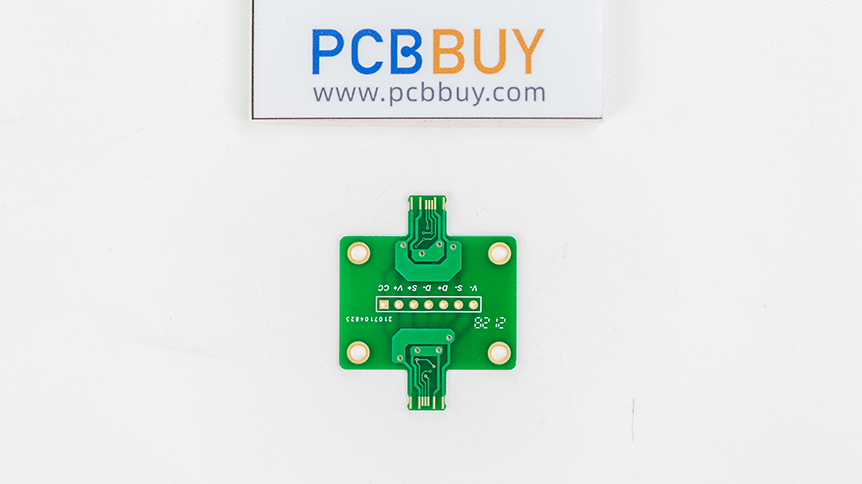
Controlled impedance PCB manufacturing is essential for modern high-speed digital and RF designs. As signal frequencies increase, impedance mismatch becomes a major source of signal reflection, timing errors, and electromagnetic interference.
This article explains how controlled impedance PCB manufacturing is achieved in real production environments, focusing on process control, material behavior, and manufacturing accuracy rather than theoretical impedance calculations alone.
What Is Controlled Impedance in PCB Manufacturing?
Controlled impedance refers to maintaining a specific characteristic impedance—such as 50Ω, 90Ω, or 100Ω differential—within a defined tolerance throughout PCB fabrication.
In manufacturing terms, controlled impedance means:
-
Impedance targets are defined before production
-
Stackup parameters are fixed and verified
-
Process variations are minimized and compensated
It is a manufacturing discipline, not just a design requirement.
Why Impedance Control Depends on Manufacturing, Not Only Design
While impedance calculators provide theoretical values, actual PCB impedance is influenced by multiple manufacturing variables:
-
Dielectric thickness tolerance
-
Resin content variation
-
Copper thickness after plating
-
Etching accuracy and line width control
-
Lamination pressure and temperature stability
Without tight process control, even a well-designed impedance model may fail in production.
Key Factors in Controlled Impedance PCB Manufacturing
1. Material Selection and Consistency
Stable dielectric constant (Dk) across frequency and temperature is essential. Inconsistent material batches can cause impedance drift even when geometry remains unchanged.
Manufacturing-oriented material control includes:
-
Qualified material suppliers
-
Incoming material inspection
-
Lot traceability
2. Stackup Engineering and Validation
Stackup design directly defines impedance behavior. Controlled impedance manufacturing requires:
-
Fixed dielectric thickness per layer
-
Defined copper foil types
-
Pre-production stackup simulation and approval
Once validated, stackup parameters must remain unchanged during mass production.
3. Copper Thickness and Etching Control
Copper thickness affects trace geometry and impedance. Manufacturing control focuses on:
-
Plating thickness uniformity
-
Etch factor compensation
-
Line width tolerance control
High-speed designs often require tighter etching tolerances than standard PCBs.
4. Lamination Process Stability
Lamination determines final dielectric thickness and resin distribution. Key controls include:
-
Pressure and temperature profiles
-
Heating and cooling rates
-
Prevention of resin starvation or over-flow
Stable lamination is critical for multilayer impedance consistency.
5. Impedance Coupon Design and Measurement
Controlled impedance PCBs typically include test coupons for verification. Manufacturing best practices include:
-
Coupon placement matching real signal layers
-
Same lamination and plating conditions
-
Controlled impedance measurement using TDR
Measurement results are used to validate and fine-tune process parameters.
Typical Controlled Impedance Tolerances in Manufacturing
|
Impedance Type |
Common Target |
Typical Tolerance |
|
Single-ended |
50Ω |
±10% / ±7% |
|
Differential |
90Ω / 100Ω |
±10% / ±8% |
|
RF Lines |
50Ω |
±5% (advanced control) |
Actual achievable tolerance depends on layer count, material type, and process maturity.
Manufacturing Challenges in High-Layer Controlled Impedance PCBs
As layer count increases, impedance control becomes more complex due to:
-
Resin flow variation across layers
-
Accumulated dielectric tolerance
-
Registration and etching deviations
High-layer designs require tighter process windows and experienced production control.
How PCBBUY Manages Controlled Impedance PCB Manufacturing?
PCBBUY approaches controlled impedance manufacturing as a system-level process:
-
Early stackup review with customers
-
Controlled material selection and storage
-
Dedicated impedance-controlled production lines
-
Coupon-based impedance validation before shipment
This ensures impedance targets are achieved consistently across prototypes and volume production.

Conclusion
Controlled impedance PCB manufacturing is not achieved by calculation alone. It requires disciplined process control across materials, stackup, lamination, copper processing, and verification.
When impedance control is integrated into manufacturing execution, designers gain predictable signal integrity and higher production yield.
FAQ
What is the difference between impedance design and impedance manufacturing?
Design defines target impedance values, while manufacturing ensures those values are achieved consistently in real production.
Is impedance control possible with standard FR-4 materials?
Yes, for many applications. However, tighter tolerances and higher frequencies may require low-loss or modified FR-4 materials.
Why does impedance vary even when trace width is correct?
Because dielectric thickness, copper plating, and etching variations also affect impedance.
Do all controlled impedance PCBs require impedance coupons?
Most high-speed or RF boards require coupons to verify impedance accuracy and process stability.
When should manufacturers be involved in impedance planning?
Ideally during the stackup definition stage, before finalizing trace geometry.
Industry Category