Dielectric Thickness Control in Multilayer PCB
By:PCBBUY 03/31/2026 16:51

In high-layer-count and high-speed PCB designs, dielectric thickness control in multilayer PCB manufacturing plays a decisive role in impedance accuracy, signal integrity, and long-term reliability. Even small variations in dielectric thickness can lead to impedance deviation, skew, and performance instability.
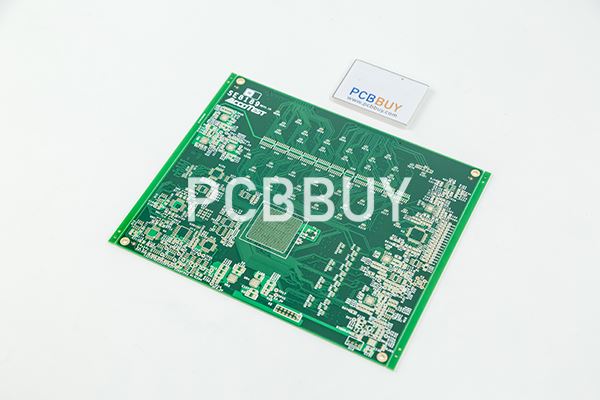
For PCB manufacturers, tight dielectric thickness control is a clear indicator of lamination expertise, material engineering, and process discipline.
What Is Dielectric Thickness in Multilayer PCBs?
Dielectric thickness refers to the insulating layer distance between adjacent copper layers, typically formed by prepreg and core materials during lamination.
|
Dielectric Layer |
Function |
|
Core dielectric |
Structural support & insulation |
|
Prepreg dielectric |
Layer bonding & spacing |
|
Dielectric spacing |
Impedance and capacitance control |
Why Dielectric Thickness Control Matters?
|
Electrical Aspect |
Impact of Thickness Variation |
|
Controlled impedance |
Impedance deviation |
|
Signal integrity |
Reflection and loss |
|
Crosstalk |
Increased coupling |
|
Power integrity |
Unstable capacitance |
|
Reliability |
Stress concentration |
Dielectric Thickness Control in Multilayer PCB – Key Challenges
|
Challenge Area |
Manufacturing Risk |
Impact |
|
Resin flow variation |
Uneven dielectric spacing |
Impedance shift |
|
Prepreg glass style |
Thickness inconsistency |
Electrical deviation |
|
Lamination pressure |
Over- or under-compression |
Layer imbalance |
|
Copper distribution |
Resin starvation |
Local thickness loss |
|
Stack-up asymmetry |
Warpage and stress |
Long-term reliability issues |
Manufacturing Methodology for Dielectric Thickness Control
1. Material Selection & Stack-Up Engineering
|
Control Area |
Manufacturing Practice |
Capability Value |
|
Core material |
Tight thickness tolerance cores |
Baseline accuracy |
|
Prepreg selection |
Controlled resin content |
Thickness predictability |
|
Glass style pairing |
Balanced dielectric build |
Uniform compression |
|
High-speed materials |
Stable Dk vs thickness |
Electrical consistency |
2. Stack-Up Design Optimization
|
Control Area |
Manufacturing Practice |
Capability Value |
|
Symmetrical stack-up |
Balanced copper and dielectric |
Reduced warpage |
|
Reference plane placement |
Stable impedance environment |
Signal integrity |
|
Target dielectric modeling |
Field solver calculations |
First-pass success |
|
Copper density balancing |
Resin flow uniformity |
Thickness stability |
3. Lamination Process Control
|
Control Area |
Manufacturing Practice |
Capability Value |
|
Multi-stage lamination |
Controlled pressure ramps |
Reduced thickness drift |
|
Temperature profiling |
Optimized resin flow |
Uniform bonding |
|
Pressure uniformity |
Precision lamination tooling |
Consistent spacing |
|
Layup discipline |
Clean and repeatable builds |
Yield improvement |
4. Copper Distribution & Etching Control
|
Control Area |
Manufacturing Practice |
Capability Value |
|
Copper balancing |
Copper thieving patterns |
Resin flow consistency |
|
Etching uniformity |
Stable copper thickness |
Predictable compression |
|
Plane integrity |
Continuous copper planes |
Dielectric stability |
5. Measurement & Verification
|
Measurement Method |
Purpose |
Quality Assurance |
|
Microsection analysis |
Measure actual dielectric thickness |
Process validation |
|
SPC tracking |
Monitor thickness trends |
Process stability |
|
Impedance correlation |
Thickness vs impedance mapping |
Electrical compliance |
|
Destructive analysis |
Periodic validation |
Long-term consistency |
Applications Requiring Tight Dielectric Thickness Control
|
Application |
Reason |
|
High-speed digital systems |
Impedance accuracy |
|
RF & microwave circuits |
Signal loss control |
|
HDI & high layer count PCBs |
Stack-up density |
|
Automotive electronics |
Reliability under stress |
|
Server & networking hardware |
Signal timing stability |
What Dielectric Thickness Control Reveals About a PCB Manufacturer?
A PCB manufacturer capable of tight dielectric thickness control in multilayer PCB fabrication demonstrates:
-
Advanced stack-up engineering capability
-
Mature lamination process control
-
Strong material selection and qualification
-
Reliable measurement and SPC systems
These capabilities are fundamental for producing high-speed, high-layer-count, and high-reliability PCBs.
FAQ
FAQ 1: What is dielectric thickness control in multilayer PCB?
It is the manufacturing process of maintaining consistent insulating layer thickness between copper layers to ensure stable electrical performance.
FAQ 2: Why is dielectric thickness important for impedance control?
Impedance is directly affected by the distance between signal and reference planes. Variations in dielectric thickness cause impedance deviation.
FAQ 3: How is dielectric thickness controlled during lamination?
Through prepreg selection, pressure and temperature profiling, copper balancing, and symmetrical stack-up design.
FAQ 4: What tolerance can be achieved for dielectric thickness?
With advanced process control, tight tolerances suitable for controlled impedance designs can be consistently achieved.
FAQ 5: How is dielectric thickness verified in PCB manufacturing?
By microsection measurement, statistical process control, and impedance correlation testing.
FAQ 6: Does tighter dielectric thickness control increase PCB cost?
It may increase process complexity, but it significantly reduces electrical risk and improves overall product reliability.
Conclusion
Dielectric thickness control in multilayer PCB manufacturing is a core capability that underpins impedance accuracy, signal integrity, and reliability. PCB manufacturers with strong control methodologies are better positioned to support high-speed, high-density, and mission-critical electronic products.
Industry Category