Embedded Passive Components in PCB Manufacturing
By:PCBBUY 03/31/2026 14:52
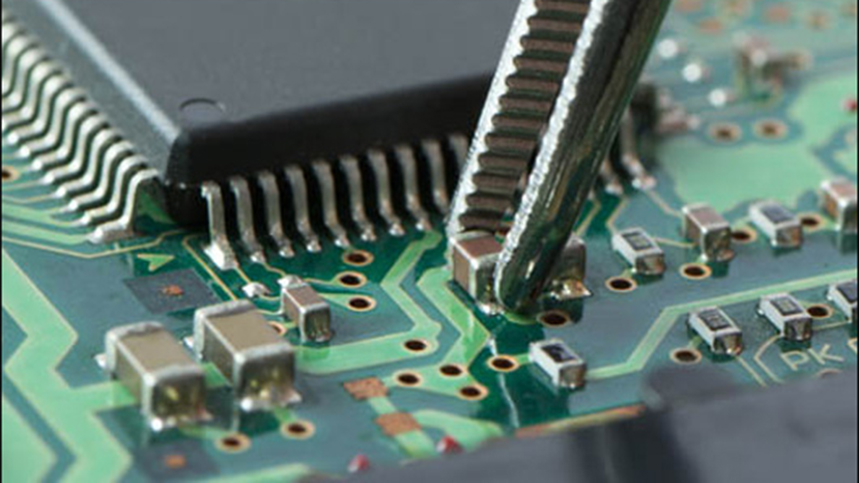
As electronic products continue to move toward miniaturization, higher speed, and improved electrical performance, embedded passive components in PCB manufacturing have become an advanced solution for reducing component count and improving signal integrity.
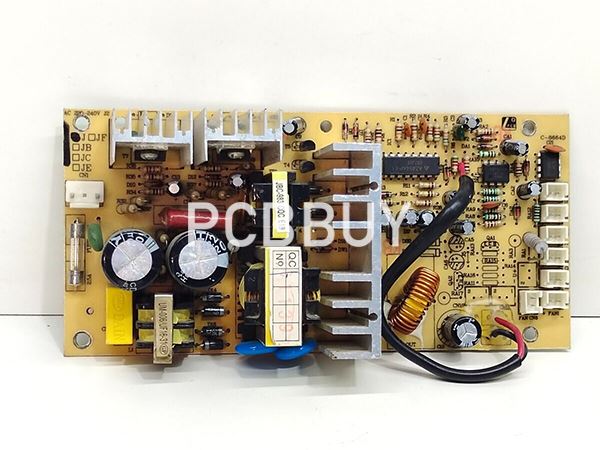
For PCB manufacturers, the ability to reliably produce embedded passive components reflects material engineering expertise, lamination precision, and process integration capability.
What Are Embedded Passive Components?
Embedded passive components are resistors, capacitors, or inductive structures that are integrated directly into the PCB inner layers instead of being mounted as discrete surface-mount components.
|
Component Type |
Embedded Form |
Typical Function |
|
Resistors |
Embedded resistive film |
Termination, pull-up/down |
|
Capacitors |
Embedded planar capacitance |
Decoupling, noise suppression |
|
Inductors |
Embedded spiral traces |
Filtering (limited cases) |
Why Use Embedded Passive Components?
|
Benefit |
Description |
|
Size reduction |
Fewer surface-mounted components |
|
Improved signal integrity |
Shorter interconnect paths |
|
Better EMI performance |
Reduced loop inductance |
|
Higher reliability |
Fewer solder joints |
|
Improved assembly yield |
Simplified SMT process |
Embedded Passive Components in PCB Manufacturing – Key Challenges
|
Challenge Area |
Description |
Manufacturing Risk |
|
Material selection |
Specialized resistive or capacitive materials |
Value inconsistency |
|
Lamination precision |
Tight thickness and alignment tolerance |
Electrical deviation |
|
Value control |
Resistance/capacitance accuracy |
Functional failure |
|
Registration accuracy |
Alignment of embedded patterns |
Mismatch or shorts |
|
Repairability |
Embedded elements cannot be reworked |
Yield sensitivity |
Embedded Passive Components – Manufacturing Process Overview
1. Material Selection & Qualification
|
Control Aspect |
Manufacturing Practice |
Capability Benefit |
|
Resistive materials |
Thin-film or polymer resistive layers |
Stable resistance values |
|
Capacitive laminates |
High-Dk dielectric materials |
High capacitance density |
|
Material consistency |
Lot qualification & traceability |
Repeatable performance |
2. Inner Layer Patterning & Value Control
|
Control Aspect |
Manufacturing Practice |
Capability Benefit |
|
Precision imaging |
LDI for fine resistive patterns |
Accurate geometry |
|
Laser trimming (if applicable) |
Resistance fine-tuning |
Tight tolerance |
|
Etching compensation |
Geometry-based value adjustment |
First-pass success |
3. Lamination & Stack-Up Integration
|
Control Aspect |
Manufacturing Practice |
Capability Benefit |
|
Stack-up planning |
Embedded layers isolated from stress |
Reliability |
|
Resin flow control |
Optimized prepreg selection |
Void-free bonding |
|
Multi-stage lamination |
Controlled pressure & temperature |
Stable embedded layers |
4. Registration & Process Control
|
Control Aspect |
Manufacturing Practice |
Capability Benefit |
|
Tight registration control |
Inner-to-inner alignment monitoring |
Pattern accuracy |
|
SPC data tracking |
Value distribution monitoring |
Process stability |
|
Inline inspection |
AOI before lamination |
Defect prevention |
5. Testing & Reliability Verification
|
Test Method |
Purpose |
Assurance |
|
Electrical testing |
Verify resistance/capacitance values |
Functional accuracy |
|
Microsection analysis |
Inspect embedded layer integrity |
Structural reliability |
|
Thermal cycling |
Stress embedded structures |
Long-term stability |
|
Moisture resistance testing |
Environmental reliability |
Performance consistency |
Typical Applications for Embedded Passive Components
|
Application |
Design Motivation |
|
High-speed digital systems |
Signal integrity & decoupling |
|
RF and communication modules |
EMI control |
|
Automotive electronics |
Reliability & space saving |
|
Industrial control |
Long lifecycle |
|
Wearable / compact devices |
Miniaturization |
Why Embedded Passive Capability Reflects PCB Manufacturing Strength?
A PCB manufacturer capable of embedded passive components demonstrates:
-
Advanced material engineering and qualification
-
Precise inner layer imaging and lamination control
-
Strong registration accuracy
-
Mature testing and reliability validation
These capabilities are usually found only in high-end PCB factories supporting HDI, high layer count, and high-reliability applications.
FAQ
FAQ 1: What are embedded passive components in PCB manufacturing?
They are resistors or capacitors integrated directly into PCB inner layers instead of being mounted as discrete components.
FAQ 2: What are the main advantages of embedded passive components?
Key advantages include reduced board size, improved signal integrity, lower EMI, and higher reliability.
FAQ 3: Are embedded passive components more reliable than SMT components?
They eliminate solder joints, which improves mechanical reliability, but they require very precise manufacturing control.
FAQ 4: What materials are used for embedded resistors and capacitors?
Embedded resistors use resistive films or polymers, while embedded capacitors use high-Dk dielectric laminates.
FAQ 5: Can embedded passive components be repaired or reworked?
No. Once laminated, embedded components cannot be reworked, making process yield control critical.
FAQ 6: Do embedded passive components increase PCB cost?
They may increase PCB fabrication cost but can reduce overall system cost by simplifying assembly and improving performance.
Conclusion
Embedded passive components in PCB manufacturing represent an advanced integration of materials, design, and process control. PCB manufacturers with this capability can support smaller, faster, and more reliable electronic products, especially in high-speed and high-density applications.
Industry Category