Fine Line PCB Manufacturing Yield Improvement Methods
By:PCBBUY 04/27/2026 15:19
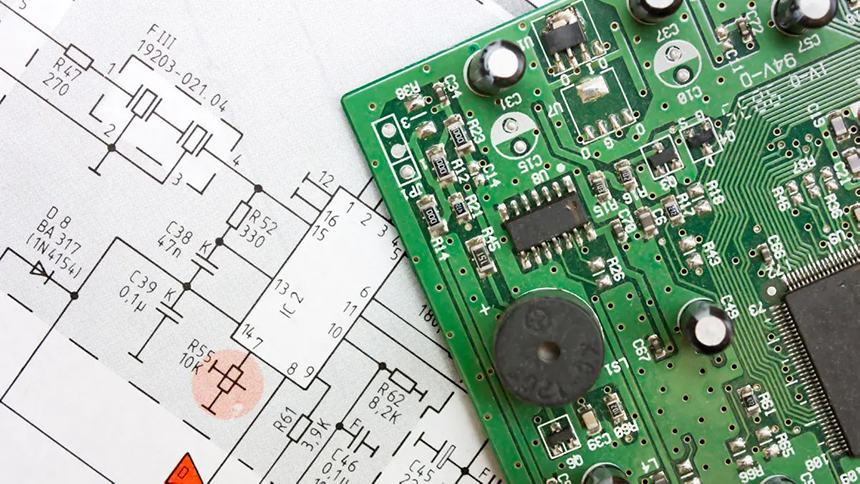
As electronics continue to evolve toward higher integration, miniaturization, and high-speed performance, fine line PCB manufacturing has become a standard requirement rather than a niche capability. However, achieving stable yield in mass production remains one of the most challenging aspects of fine line PCB fabrication.
Effective fine line PCB manufacturing yield improvement methods reflect a manufacturer’s true strength in process control, engineering optimization, and production discipline.
What Is Fine Line PCB Manufacturing?
Fine line PCB manufacturing refers to the fabrication of PCBs with very narrow trace widths and spacing, typically ≤75 μm (3 mil), and in advanced cases down to 35 μm (1.4 mil) or below.
|
Parameter |
Typical Range |
|
Line width / spacing |
35–75 μm |
|
Copper thickness |
1/3 oz – 1 oz |
|
Imaging method |
LDI preferred |
|
Common applications |
HDI, high-speed, high-density PCBs |
Why Yield Is Critical in Fine Line PCB Manufacturing?
|
Yield Risk |
Manufacturing Impact |
|
Line breakage |
Open circuits |
|
Over-etching |
Impedance deviation |
|
Line bridging |
Electrical shorts |
|
Dimensional variation |
Assembly failure |
|
Rework & scrap |
Increased cost |
In mass production, even a small yield fluctuation can significantly impact delivery time, cost, and product reliability.
Key Yield Challenges in Fine Line PCB Manufacturing
|
Challenge |
Root Cause |
|
Etching undercut |
Chemical isotropy |
|
Imaging deviation |
Exposure inconsistency |
|
Copper thickness variation |
Uneven plating |
|
Material instability |
Dimensional shrinkage |
|
Process drift |
Long production cycles |
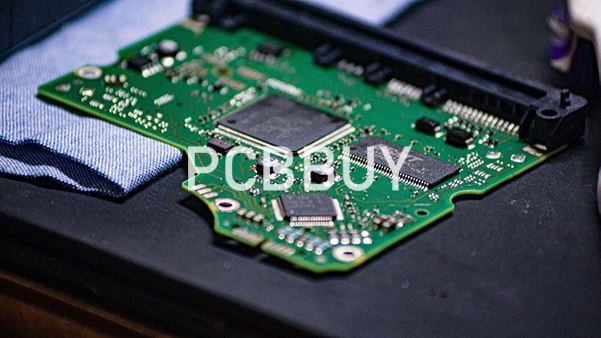
Fine Line PCB Manufacturing Yield Improvement Methods
1. High-Precision Imaging Control (LDI)
|
Control Aspect |
Manufacturing Practice |
Yield Benefit |
|
Laser Direct Imaging |
High-resolution digital exposure |
Accurate line definition |
|
Image scaling compensation |
Etching loss offset |
Final dimension accuracy |
|
Environmental stability |
Controlled temp & humidity |
Consistent imaging |
2. Etching Compensation & Chemistry Control
|
Control Aspect |
Manufacturing Practice |
Yield Benefit |
|
Line width biasing |
CAM-based compensation |
Reduced opens |
|
Etchant concentration control |
Automatic dosing systems |
Stable etch rate |
|
Conveyor speed tuning |
Time-based etching control |
Uniform results |
3. Copper Thickness Uniformity Optimization
|
Control Aspect |
Manufacturing Practice |
Yield Benefit |
|
Panel plating balance |
Uniform current density |
Predictable etching |
|
Thieving pattern design |
Copper density equalization |
Reduced variation |
|
Thickness SPC monitoring |
Real-time deviation control |
Stable mass production |
4. Material Selection & Dimensional Stability
|
Control Aspect |
Manufacturing Practice |
Yield Benefit |
|
Low-shrinkage laminates |
Stable dielectric systems |
Dimensional accuracy |
|
Matched prepreg systems |
Controlled resin flow |
Reduced distortion |
|
Material incoming inspection |
Consistent base quality |
Reduced variation |
5. Stack-Up & Copper Balance Engineering
|
Control Aspect |
Manufacturing Practice |
Yield Benefit |
|
Symmetrical stack-up |
Stress-balanced design |
Reduced warpage |
|
Copper density balance |
Layout optimization |
Uniform processing |
|
DFM engineering review |
Pre-production risk elimination |
First-pass success |
6. Inspection, Feedback & Process Control
|
Verification Method |
Purpose |
Yield Impact |
|
AOI fine line inspection |
Line width & spacing check |
Early defect detection |
|
Cross-section analysis |
Copper profile verification |
Process tuning |
|
SPC trend monitoring |
Long-term stability |
Predictable yield |
|
Engineering feedback loop |
Continuous optimization |
Yield improvement |
Typical Fine Line Yield Control Capability Benchmarks
|
Capability Item |
Production-Level Target |
|
Minimum stable line width |
35–50 μm |
|
Line width tolerance |
±10–15 μm |
|
Mass production yield |
≥95% (design-dependent) |
|
Applicable standards |
IPC Class 2 / 3 |
Applications Requiring High Fine Line Yield Stability
|
Application |
Reason |
|
HDI PCBs |
Dense routing |
|
Controlled impedance boards |
Signal integrity |
|
High-speed digital systems |
Line accuracy |
|
Automotive electronics |
Reliability |
|
Industrial & medical electronics |
Consistency |
What Fine Line Yield Capability Reveals About a PCB Manufacturer?
A manufacturer capable of delivering high and stable yield in fine line PCB manufacturing demonstrates:
-
Advanced LDI imaging and CAM compensation
-
Mature plating and etching process control
-
Strong material and stack-up engineering
-
Reliable mass production repeatability
-
Proven DFM-driven yield optimization
These capabilities directly translate into lower risk, faster ramp-up, and reduced total cost for customers.
FAQ
FAQ 1: What is considered fine line PCB manufacturing?
Typically, PCBs with trace widths and spacing of 75 μm (3 mil) or below are considered fine line PCBs.
FAQ 2: Why is yield more difficult to control in fine line PCBs?
Because fine lines are extremely sensitive to etching variation, imaging accuracy, and copper thickness uniformity.
FAQ 3: How can fine line PCB yield be improved?
Through LDI imaging, etching compensation, uniform plating, material stability control, and strong DFM engineering.
FAQ 4: Does fine line manufacturing affect impedance control?
Yes. Precise line width control is critical for controlled impedance and signal integrity.
FAQ 5: How is fine line yield monitored in mass production?
Using AOI inspection, SPC data analysis, cross-section validation, and engineering feedback loops.
FAQ 6: Does improving fine line yield increase PCB cost?
While it requires tighter control, it reduces overall cost by minimizing scrap, rework, and delivery risk.
Conclusion
Fine line PCB manufacturing yield improvement methods are a cornerstone of advanced PCB production capability. Manufacturers with proven yield control can consistently deliver high-precision, high-reliability fine line PCBs at scale, supporting next-generation electronic products.
Industry Category