Flex-Rigid PCB Impedance Control Methodology
By:PCBBUY 03/31/2026 16:37
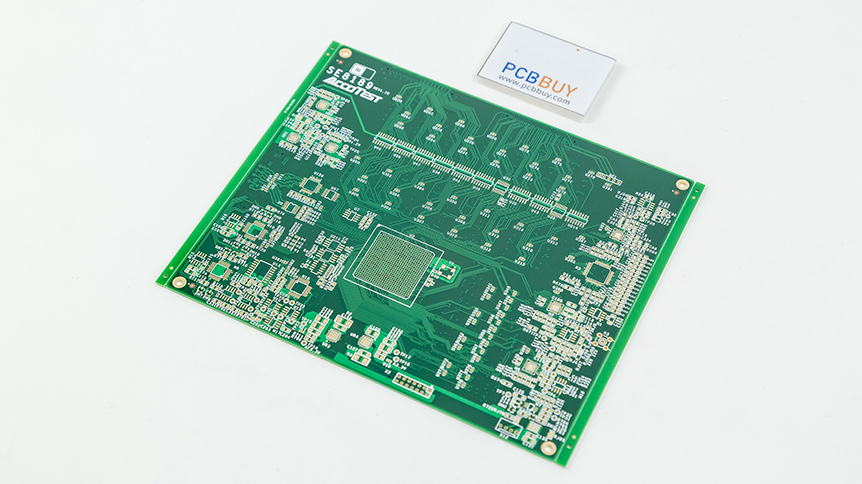
With the rapid growth of high-speed, compact, and multifunctional electronic products, flex-rigid PCBs are increasingly used in applications where space saving and mechanical reliability are critical. At the same time, controlled impedance has become a key requirement for signal integrity.
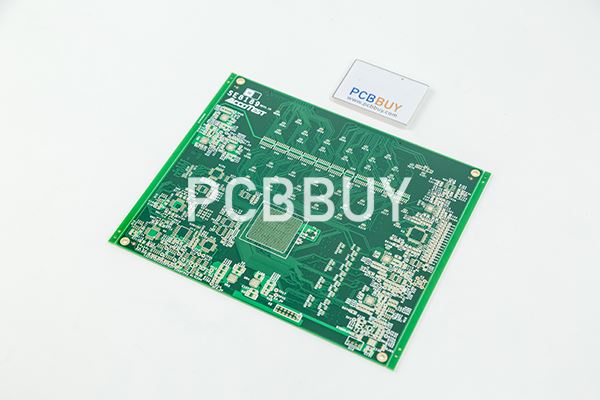
Implementing a reliable flex-rigid PCB impedance control methodology requires close coordination between material selection, stack-up design, process control, and testing capability—all of which reflect a PCB manufacturer’s true engineering strength.
Why Impedance Control Is More Complex in Flex-Rigid PCBs?
|
Factor |
Impact on Impedance |
|
Mixed materials (FR-4 + polyimide) |
Different dielectric constants |
|
Varying layer thickness |
Impedance discontinuity |
|
Bend areas |
Mechanical stress affects geometry |
|
Adhesiveless vs adhesive structures |
Signal consistency variation |
|
Hybrid stack-ups |
Complex impedance modeling |
Typical Impedance-Controlled Structures in Flex-Rigid PCBs
|
Structure Type |
Application |
|
Microstrip |
High-speed single-ended signals |
|
Stripline |
Noise-sensitive differential signals |
|
Differential pairs |
USB, HDMI, LVDS |
|
RF controlled traces |
Wireless communication |
|
Power impedance control |
Stable power delivery |
Flex-Rigid PCB Impedance Control Methodology – Manufacturing View
1. Material Selection & Dielectric Management
|
Control Area |
Manufacturing Practice |
Capability Value |
|
Rigid material |
Low-Dk, low-loss FR-4 or high-speed laminates |
Signal stability |
|
Flexible material |
Polyimide with stable Dk |
Consistent impedance |
|
Adhesive control |
Adhesiveless or controlled adhesive thickness |
Reduced variation |
|
Copper type |
Rolled annealed (RA) copper for flex layers |
Geometry consistency |
2. Stack-Up Design & Impedance Modeling
|
Control Area |
Manufacturing Practice |
Capability Value |
|
Layer symmetry |
Balanced rigid-flex stack-up |
Reduced warpage |
|
Reference planes |
Continuous ground planes |
Impedance stability |
|
Trace geometry modeling |
Field solver-based calculation |
First-pass accuracy |
|
Transition design |
Rigid-to-flex impedance continuity |
Reduced reflection |
3. Imaging & Etching Precision
|
Control Area |
Manufacturing Practice |
Capability Value |
|
LDI imaging |
Fine-line accuracy |
Tight impedance tolerance |
|
Etching compensation |
Trace width control |
Reduced impedance deviation |
|
Copper thickness uniformity |
Process monitoring |
Signal consistency |
4. Lamination & Thickness Control
|
Control Area |
Manufacturing Practice |
Capability Value |
|
Multi-stage lamination |
Controlled pressure & temperature |
Stable dielectric thickness |
|
Resin flow control |
Optimized prepreg selection |
Impedance repeatability |
|
Flex area protection |
Dedicated tooling & fixtures |
Geometry integrity |
5. Rigid-to-Flex Transition Control
|
Control Area |
Manufacturing Practice |
Capability Value |
|
Coverlay opening accuracy |
Precision laser processing |
Smooth transitions |
|
Stiffener integration |
Mechanical support without signal distortion |
Reliability |
|
Bend zone definition |
Controlled bending radius |
Impedance stability |
6. Impedance Testing & Verification
|
Test Method |
Purpose |
Quality Assurance |
|
TDR impedance testing |
Measure actual impedance |
Compliance verification |
|
Coupon design |
Representative test structures |
Accurate measurement |
|
SPC monitoring |
Track impedance distribution |
Process stability |
|
Reliability testing |
Thermal & bending stress |
Long-term performance |
Typical Applications Requiring Flex-Rigid Impedance Control
|
Application |
Key Requirement |
|
Consumer electronics |
Compact high-speed interconnects |
|
Automotive electronics |
Signal reliability under vibration |
|
Medical devices |
Stable performance in dynamic use |
|
Aerospace & defense |
High reliability and precision |
|
Wearables |
Flexibility with signal integrity |
What Impedance Control Capability Reveals About a PCB Manufacturer?
A manufacturer capable of executing a robust flex-rigid PCB impedance control methodology demonstrates:
-
Deep material and stack-up engineering expertise
-
Precise imaging, etching, and lamination control
-
Strong rigid-flex transition management
-
Mature impedance testing and quality systems
These capabilities are essential for high-speed, high-reliability flex-rigid PCB production.

FAQ
FAQ 1: What is flex-rigid PCB impedance control methodology?
It refers to the systematic manufacturing approach used to maintain controlled impedance across both rigid and flexible sections of a PCB.
FAQ 2: Why is impedance control more difficult in flex-rigid PCBs?
Because flex-rigid PCBs use different materials, varying thicknesses, and bending structures, which can easily cause impedance discontinuities if not properly controlled.
FAQ 3: What materials are commonly used for impedance-controlled flex-rigid PCBs?
Typically low-Dk FR-4 or high-speed laminates for rigid areas and polyimide for flexible areas, often with adhesiveless constructions.
FAQ 4: How is impedance verified in flex-rigid PCB manufacturing?
Through TDR impedance testing, impedance coupons, and statistical process control to ensure consistency.
FAQ 5: Can impedance be controlled through rigid-to-flex transitions?
Yes. With proper stack-up planning, reference planes, and transition design, impedance continuity can be maintained.
FAQ 6: Does impedance control increase flex-rigid PCB cost?
It may increase fabrication complexity, but it significantly reduces signal integrity risk and overall system cost in high-speed applications.

Conclusion
A well-defined flex-rigid PCB impedance control methodology is critical for ensuring signal integrity, reliability, and performance in advanced electronic products. PCB manufacturers with strong impedance control capabilities are better equipped to support high-speed, compact, and mission-critical designs.
Industry Category