Flex-Rigid PCB Impedance Control Methodology
By:PCBBUY 02/28/2026 15:01
Introduction
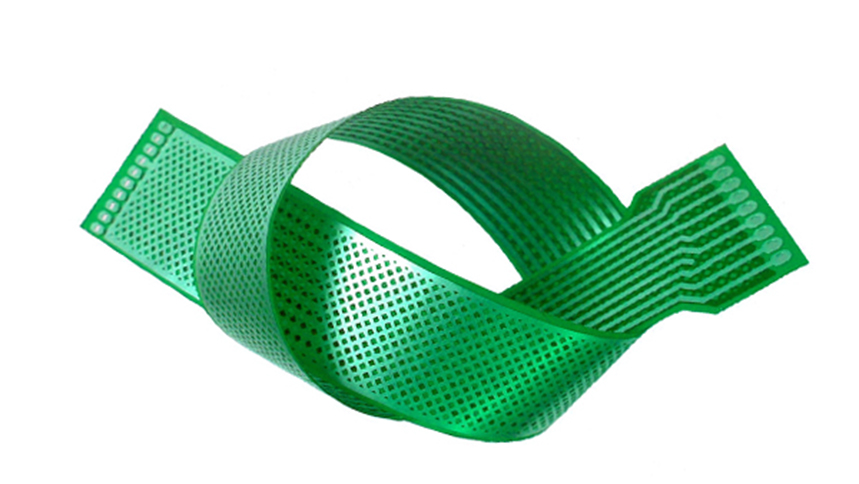
Flex-rigid PCBs combine rigid boards and flexible circuits into a single structure, enabling compact design, improved reliability, and reduced interconnects. However, impedance control in flex-rigid PCBs is significantly more complex than in standard rigid boards.
This article explains a practical flex-rigid PCB impedance control methodology, focusing on how impedance targets are achieved through coordinated design decisions and manufacturing process control.
Why Impedance Control Is Challenging in Flex-Rigid PCBs?
Unlike rigid PCBs with uniform materials and thicknesses, flex-rigid boards introduce multiple impedance risk factors:
-
Different dielectric materials (FR-4 vs polyimide)
-
Variable copper thickness between rigid and flex areas
-
Uneven stackup transitions
-
Mechanical bending stress affecting geometry
As a result, impedance control must be treated as a system-level manufacturing methodology, not a single calculation step.

Key Elements of Flex-Rigid PCB Impedance Control Methodology
1. Material Selection and Dielectric Stability
Impedance is strongly influenced by dielectric constant (Dk). In flex-rigid designs:
|
Area |
Typical Material |
Impedance Impact |
|
Rigid section |
FR-4 |
Stable, predictable |
|
Flex section |
Polyimide |
Higher Dk variation |
|
Adhesiveless flex |
Rolled annealed copper |
Better consistency |
Matching dielectric behavior across rigid and flex regions is critical for impedance continuity.
2. Stackup Definition Across Rigid and Flex Regions
A unified stackup strategy is essential.
|
Stackup Aspect |
Methodology |
|
Reference planes |
Continuous ground planes where possible |
|
Layer transitions |
Controlled impedance routing only in stable layers |
|
Flex layer count |
Minimized to reduce variation |
|
Dielectric thickness |
Locked per region |
Manufacturers must validate stackup feasibility before routing begins.
3. Controlled Impedance Routing Strategy
Not all signal paths should cross flex and rigid regions.
Best practices include:
-
Routing impedance-critical signals within rigid areas
-
Avoiding impedance-controlled traces across bend zones
-
Using wider trace geometries in flex regions to compensate for material differences
This routing strategy directly reduces manufacturing risk.

4. Copper Thickness and Etching Compensation
Copper thickness variation affects impedance more significantly in flex circuits due to thinner dielectrics.
|
Process Factor |
Control Method |
|
Base copper thickness |
Tight incoming material control |
|
Plating thickness |
Region-specific plating control |
|
Etch factor |
Separate compensation models for flex layers |
Precise copper control is a cornerstone of impedance methodology.
5. Lamination and Bonding Process Control
Flex-rigid lamination introduces impedance risks due to resin flow and pressure imbalance.
|
Lamination Risk |
Control Approach |
|
Dielectric thickness drift |
Controlled pressure profiles |
|
Resin squeeze-out |
Optimized bonding films |
|
Layer shift |
Precision alignment tooling |
Stable lamination ensures consistent dielectric spacing for impedance control.
6. Impedance Coupon Design and Measurement Strategy
Testing impedance in flex-rigid PCBs requires careful coupon planning.
|
Aspect |
Methodology |
|
Coupon placement |
Rigid area only |
|
Test method |
TDR measurement |
|
Correlation |
Coupon vs actual signal layer |
|
Validation |
Cross-section confirmation |
Direct impedance measurement in flex areas is often impractical, making correlation accuracy essential.
Typical Impedance Targets in Flex-Rigid PCBs
|
Signal Type |
Common Target |
Typical Tolerance |
|
Single-ended |
50Ω |
±10% |
|
Differential |
90Ω / 100Ω |
±10% |
|
High-speed interfaces |
Application-specific |
±8% (advanced control) |
Tighter tolerances require more conservative routing and stackup design.
Manufacturing Risks Affecting Impedance Reliability
|
Risk |
Root Cause |
|
Impedance mismatch |
Material Dk variation |
|
Signal discontinuity |
Layer transitions |
|
Long-term drift |
Mechanical flexing |
|
Yield loss |
Over-tight tolerances |
Effective methodology anticipates these risks early in the design phase.
How PCBBUY Implements Flex-Rigid PCB Impedance Control?
PCBBUY applies a manufacturing-driven impedance control methodology for flex-rigid PCBs:
|
Control Area |
Execution |
|
Stackup engineering |
Rigid-flex co-design validation |
|
Material control |
Qualified flex and rigid laminates |
|
Process separation |
Dedicated flex-rigid production flow |
|
Impedance verification |
Coupon-based TDR testing |
This approach ensures impedance targets are achievable and repeatable from prototype to volume production.
Conclusion
Flex-rigid PCB impedance control requires more than standard impedance calculation tools. It demands a structured methodology that integrates material selection, stackup planning, routing strategy, and manufacturing process control.
By treating impedance as a manufacturing-controlled parameter, flex-rigid PCBs can achieve stable electrical performance and high production reliability.
FAQ
Is impedance control harder in flex-rigid PCBs than rigid PCBs?
Yes. Material differences and structural transitions make impedance control significantly more complex.
Should impedance-controlled traces pass through flex areas?
Ideally no. Critical impedance traces should remain in rigid sections whenever possible.
Can impedance be measured directly in flex areas?
Usually not. Impedance is verified using coupons in rigid regions and correlated to flex layers.
Does bending affect impedance performance?
Repeated mechanical stress can cause long-term impedance drift if not properly designed.
When should manufacturers be involved in flex-rigid impedance planning?
Before final routing and stackup definition, ideally at the early design stage.
Industry Category