HDI PCB Stacked Microvia Reliability: Manufacturing Capabilities
By:PCBBUY 05/22/2026 15:30
Technical Overview of Stacked Microvia Reliability in HDI PCBs
|
Topic |
Professional Explanation |
|
What Are Stacked Microvias |
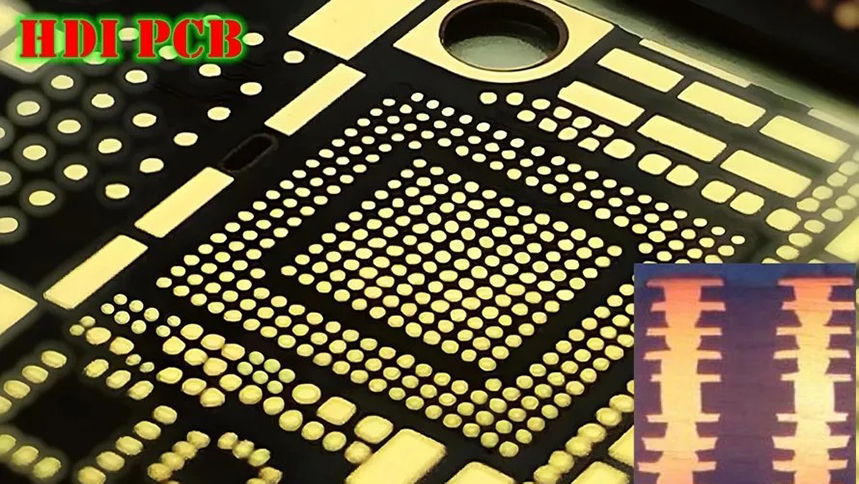
Stacked microvias are vertically aligned laser-drilled microvias commonly used in HDI PCBs to achieve high interconnection density, especially in advanced electronics with limited board space. |
|
Why Reliability Matters |
Poor stacked microvia reliability can lead to barrel cracking, copper separation, and intermittent electrical failures, particularly under thermal cycling and mechanical stress. |
|
Common Reliability Risks |
Typical failure modes include insufficient copper filling, void formation, misalignment between layers, and weak interlayer bonding caused by improper lamination control. |
|
Industry Applications |
Stacked microvias are widely applied in automotive electronics, medical devices, aerospace systems, high-speed communication equipment, and advanced consumer electronics. |
PCBBUY’s Process Controls for HDI PCB Stacked Microvia Reliability
|
Manufacturing Stage |
PCBBUY Capability Description |
|
Laser Drilling Accuracy |
PCBBUY utilizes high-precision UV laser drilling systems to ensure consistent microvia diameter, smooth via walls, and accurate layer-to-layer alignment. |
|
Copper Filling Technology |
Advanced electroplating and pulse plating techniques are applied to achieve void-free, high-density copper-filled stacked microvias with uniform grain structure. |
|
Lamination Process Control |
Multi-stage lamination with controlled pressure, temperature, and resin flow ensures strong interlayer adhesion and minimizes stress concentration at microvia interfaces. |
|
Desmear & Surface Treatment |
Plasma desmear and optimized chemical treatment enhance copper adhesion and improve the long-term reliability of stacked microvia structures. |
|
In-Process Inspection |
Cross-section analysis, AOI, and X-ray inspection are routinely conducted to verify copper fill quality and stacked microvia integrity throughout production. |

Reliability Enhancement Methods Used by PCBBUY
|
Reliability Factor |
Engineering Practice |
|
Thermal Cycling Resistance |
Optimized copper thickness distribution and controlled via aspect ratios reduce fatigue failure during repeated thermal expansion and contraction. |
|
Mechanical Strength |
Reinforced stacked microvia structures combined with precise resin control help withstand vibration and mechanical stress. |
|
Electrical Stability |
Uniform copper filling minimizes impedance variation and ensures stable signal transmission in high-speed HDI designs. |
|
Long-Term Durability |
Strict process control and material qualification improve resistance to aging, delamination, and micro-cracking over the PCB lifecycle. |
Why Choose PCBBUY for HDI PCB Stacked Microvia Manufacturing?
|
Advantage |
Description |
|
Proven HDI Experience |
PCBBUY has extensive experience in manufacturing advanced HDI PCBs with stacked and staggered microvia structures. |
|
Process Customization |
Stack-up design, microvia structure, and copper filling processes are customized according to customer reliability requirements. |
|
Engineering Support |
Professional DFM and reliability analysis are provided at early design stages to prevent stacked microvia failures. |
|
Export-Oriented Quality |
PCBBUY’s HDI PCBs meet international reliability standards, making them suitable for global OEM and EMS customers. |
SEO
Q1: What affects HDI PCB stacked microvia reliability the most?
A1: The most critical factors include copper filling quality, lamination control, microvia alignment accuracy, and material compatibility. Poor control in any of these areas can significantly reduce reliability.
Q2: Are stacked microvias less reliable than staggered microvias?
A2: Stacked microvias require more advanced process control and are generally more challenging to manufacture, but with proper copper filling and lamination techniques, their reliability can meet or exceed application requirements.
Q3: How does copper filling improve stacked microvia reliability?
A3: Complete copper filling eliminates voids, enhances mechanical strength, and improves thermal conductivity, reducing the risk of cracking or electrical failure.
Q4: Can PCBBUY manufacture high-layer HDI PCBs with stacked microvias?
A4: Yes. PCBBUY supports multi-layer HDI PCB structures with stacked microvias and provides engineering evaluation to ensure long-term reliability.
Q5: What industries benefit most from reliable stacked microvia HDI PCBs?
A5: Automotive electronics, medical devices, aerospace systems, industrial control, and high-speed communication equipment benefit greatly from reliable stacked microvia designs.
Industry Category