High Layer Count PCB Manufacturing Capabilities
By:PCBBUY 03/25/2026 16:42
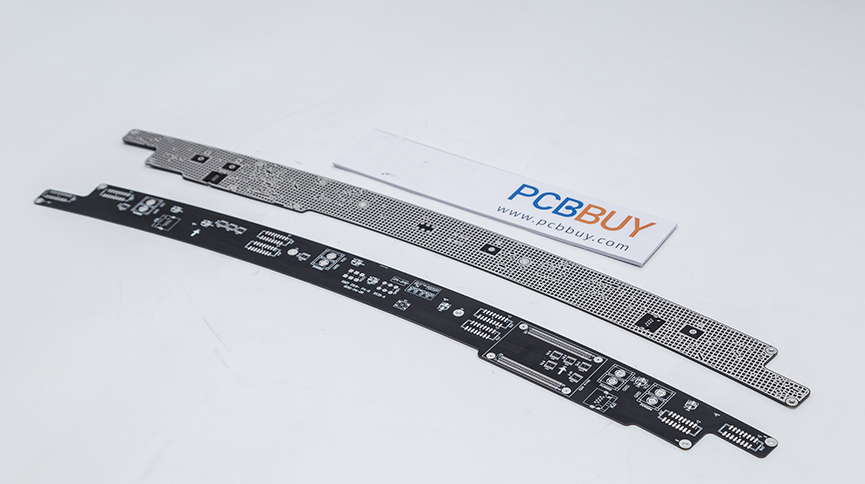
High layer count PCBs play a critical role in advanced electronic systems where high signal density, complex routing, and superior electrical performance are required. Industries such as telecommunications, data centers, industrial control, aerospace, and medical electronics increasingly rely on multilayer PCB designs to achieve compact size and reliable performance.
As a professional PCB manufacturer, PCBBUY specializes in high layer count PCB fabrication, providing stable, scalable, and IPC-compliant solutions for global customers.
What Is a High Layer Count PCB?
A high layer count PCB typically refers to a printed circuit board with 10 layers or more, with advanced applications commonly requiring 16, 20, 24, 32 layers or beyond. As layer count increases, manufacturing complexity rises significantly, placing higher demands on lamination accuracy, via reliability, impedance control, and material selection.
High Layer Count PCB Manufacturing Overview (PCBBUY)
|
Manufacturing Aspect |
PCBBUY Capability Description |
|
Supported Layer Count |
10–32 layers (higher layer counts available upon evaluation) |
|
Core / Prepreg Control |
Precise dielectric thickness control for impedance stability |
|
Lamination Process |
Multi-stage sequential lamination with strict alignment control |
|
Registration Accuracy |
Advanced optical alignment to ensure interlayer precision |
|
Via Structures |
Through-hole, blind via, buried via, stacked & staggered vias |
|
Copper Thickness Control |
Uniform copper distribution across inner and outer layers |
|
Impedance Control |
Single-ended & differential impedance with tight tolerance |
|
Material Options |
FR-4, high-Tg FR-4, low-loss materials (on request) |
|
Testing & Inspection |
AOI, X-ray inspection, electrical testing |
|
Standards Compliance |
IPC-6012, IPC-A-600, customer-specific requirements |
Key Manufacturing Challenges of High Layer Count PCBs
High layer count PCB production requires far more than stacking additional layers. The main challenges include:
|
Challenge |
Manufacturing Focus |
|
Layer Registration |
Maintaining precise alignment across multiple laminations |
|
Signal Integrity |
Controlling impedance, crosstalk, and insertion loss |
|
Thermal Stress |
Preventing delamination and via fatigue |
|
Via Reliability |
Ensuring plating uniformity and structural integrity |
|
Yield Control |
Managing defect rates as complexity increases |
PCBBUY addresses these challenges through process standardization, advanced equipment, and strict quality management.
Why Choose PCBBUY for High Layer Count PCBs?
|
Advantage |
Description |
|
Engineering Support |
DFM review and stack-up optimization before production |
|
Stable Mass Production |
Consistent quality from prototype to volume orders |
|
Advanced Equipment |
Precision drilling, lamination, and inspection systems |
|
Process Traceability |
Full production traceability for high-reliability projects |
|
Global Service |
Efficient communication and international logistics support |
Typical Applications of High Layer Count PCBs
|
Industry |
Application Examples |
|
Telecommunications |
Base stations, network switches |
|
Data Centers |
High-speed backplanes, servers |
|
Industrial Electronics |
Automation controllers, power systems |
|
Medical Devices |
Imaging systems, monitoring equipment |
|
Aerospace & Defense |
High-reliability control and communication systems |
Quality Assurance & Standards
PCBBUY manufactures high layer count PCBs under a strict quality management system, with full compliance to international IPC standards. Each board undergoes multiple inspection and testing stages to ensure electrical performance, mechanical reliability, and long-term stability.
FAQ
Q1: What is considered a high layer count PCB?
A high layer count PCB generally refers to boards with 10 layers or more, with advanced designs often exceeding 16 or 20 layers, depending on routing and performance requirements.
Q2: Are high layer count PCBs more difficult to manufacture?
Yes. As layer count increases, manufacturing complexity rises significantly due to lamination accuracy, via reliability, and signal integrity control, requiring advanced processes and equipment.
Q3: Can PCBBUY manufacture high layer count PCBs for mass production?
Yes. PCBBUY supports both prototyping and mass production of high layer count PCBs, ensuring stable quality and consistent performance across production batches.
Q4: What materials are suitable for high layer count PCBs?
Common materials include standard FR-4 and high-Tg FR-4, while low-loss materials can be used for high-speed or high-frequency applications upon request.
Q5: How does PCBBUY ensure signal integrity in high layer count PCBs?
Signal integrity is ensured through controlled impedance design, precise dielectric thickness control, optimized stack-up planning, and rigorous testing.
Q6: Can PCBBUY provide design support for high layer count PCBs?
Yes. PCBBUY offers DFM analysis and stack-up recommendations to help customers optimize manufacturability and performance before production.
Conclusion
High layer count PCBs are essential for modern electronic systems that demand high performance, compact design, and long-term reliability. With advanced manufacturing capabilities, strict quality control, and professional engineering support, PCBBUY is a reliable partner for high layer count PCB fabrication worldwide.
Industry Category