What Are the Differences Between IPC Class 2 vs Class 3 PCB Inspection?
By:PCBBUY 08/31/2026 17:14
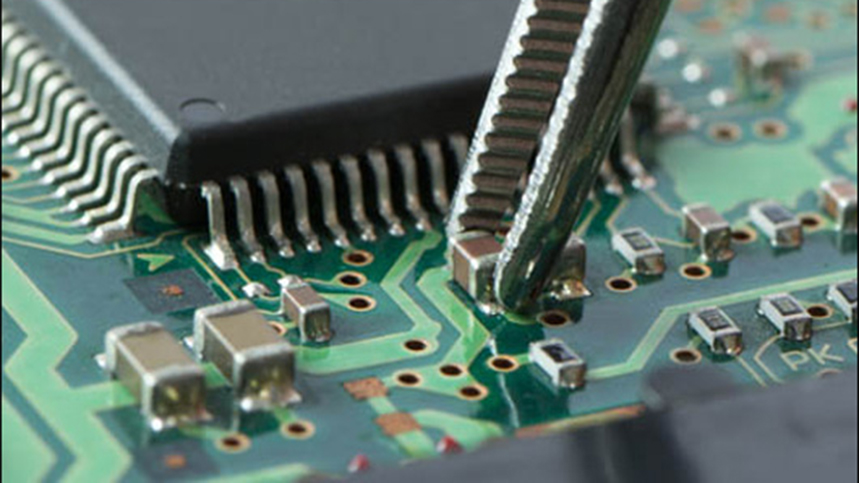
When selecting a PCB manufacturer for automotive electronics, industrial controls, power systems, energy storage, or other demanding applications, IPC Class 2 vs Class 3 PCB inspection differences are important to understand. The classification affects how PCB workmanship is evaluated, what defects may be acceptable, and how consistently the finished board must meet the specified requirements.
From a manufacturing engineer's perspective, the key point is that IPC Class 3 is not simply a PCB with "better appearance." It represents a higher level of performance and reliability expectations for products where continued operation is critical.
For PCB buyers, however, the inspection class should always be selected according to the application, design requirements, applicable IPC documents, and customer specifications rather than simply choosing the highest class.
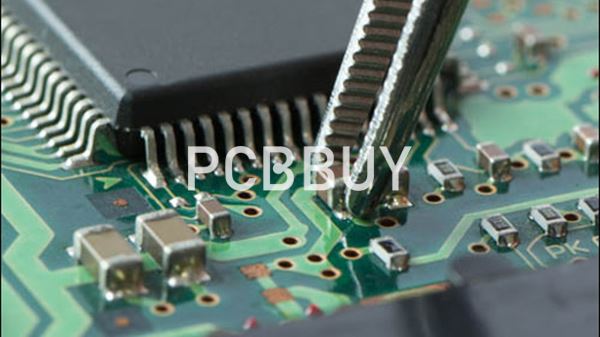
What Do IPC Class 2 and Class 3 Mean?
IPC product classes define different levels of performance and reliability expectations.
Class 2 generally applies to dedicated-service electronic products where continued performance is important but uninterrupted operation is not necessarily essential.
Class 3 applies to high-reliability electronic products where continued performance or performance-on-demand is critical. These applications can include certain automotive, industrial, aerospace, medical, and other mission-critical electronics.
It is important to distinguish product classification from inspection methods. IPC Class 2 and Class 3 do not necessarily mean that completely different inspection equipment must be used. Instead, the acceptance criteria applied during inspection can differ depending on the applicable IPC specification and the product class.
IPC Class 2 vs Class 3 PCB Inspection: What Are the Main Differences?
The most important differences are related to acceptance criteria, defect tolerance, workmanship expectations, and reliability requirements.
|
Inspection Consideration |
IPC Class 2 |
IPC Class 3 |
|
Application focus |
General-purpose and dedicated-service electronics |
High-reliability and critical electronics |
|
Workmanship requirements |
Controlled according to applicable IPC criteria |
More stringent acceptance expectations |
|
Defect tolerance |
Certain imperfections may be acceptable within specification |
Fewer defects or conditions may be acceptable |
|
Reliability expectations |
Normal product-service requirements |
Higher reliability and continued-performance requirements |
|
Inspection emphasis |
Manufacturing consistency and functional suitability |
Manufacturing consistency, reliability, and critical-process control |
|
Typical application examples |
Consumer, office, commercial electronics |
Selected automotive, industrial, medical, aerospace and mission-critical systems |
The exact acceptance criteria should always be determined from the latest applicable IPC standard and the customer's purchase specification. A manufacturer should not assume that every dimensional or visual requirement has a single universal Class 2 or Class 3 value.
Which PCB Defects Need More Attention for Class 3?
For both Class 2 and Class 3 products, PCB inspection can involve many aspects of fabrication, including conductor patterns, holes and vias, solderability, surface finish, board cleanliness, dimensions, and laminate-related conditions.

For Class 3 products, process capability becomes particularly important because small manufacturing variations can have a greater impact on long-term reliability.
1. Plated Through-Holes and Vias
Hole-wall integrity is a critical reliability consideration, particularly for multilayer boards.
During fabrication, manufacturers need to control drilling, desmear, electroless copper deposition, electroplating, and subsequent processes. Inadequate copper coverage, cracks, voids, or other plating-related problems can create electrical or mechanical reliability risks.
For demanding multilayer and HDI applications, PCBBUY supports processes including HDI, blind/buried structures, copper plating, via filling, and customized copper thickness, allowing the fabrication process to be matched to the PCB design.
2. Conductor and Solder Mask Quality
Inspection also evaluates whether traces, pads, solder mask, and other features meet the applicable design and acceptance requirements. For fine-pitch and high-density designs, registration and dimensional control become increasingly important. PCBBUY's high-precision PCB manufacturing capabilities include minimum line/space capability down to approximately 35 μm / 1.4 mil, with alignment capability specified for advanced multilayer production.
These capabilities are particularly relevant when manufacturing compact electronics for automotive electronics, industrial control equipment, energy systems, and robotic applications.
3. Lamination and Internal Structure
For multilayer PCBs, internal defects can be difficult to identify through visual inspection alone.
Lamination quality, layer registration, dielectric structure, and copper distribution all influence PCB reliability. For Class 3 applications, manufacturers should establish appropriate process controls and verification procedures rather than relying only on final visual inspection.
This is especially important for high-layer-count boards, high-current designs, and PCBs exposed to thermal cycling or mechanical stress.
Why Is Inspection Equipment Important?
A reliable inspection system combines appropriate equipment, process control, experienced engineering judgment, and clearly defined acceptance criteria. Depending on the PCB structure and inspection requirement, manufacturers may use different inspection methods.
PCBBUY applies inspection and quality-control processes including AOI (Automated Optical Inspection), flying-probe testing, and four-wire low-resistance testing. These methods address different aspects of PCB quality.
For example:
-
AOI can identify many surface-pattern and assembly-related visual defects.
-
Flying-probe testing can be used to verify electrical connectivity without requiring a dedicated fixture for certain production situations.
-
Four-wire low-resistance testing provides a more accurate method for measuring very low resistance where appropriate.
-
Dimensional and process inspections are used to verify manufacturing parameters against the customer's requirements.
The inspection strategy should be determined by the PCB's structure, application, quantity, and reliability requirements.

Does Class 3 Mean Every PCB Must Receive More Testing?
This is one of the most common misunderstandings about IPC Class 3. A Class 3 PCB requires compliance with the applicable Class 3 acceptance criteria, but product classification alone does not automatically define every test that must be performed.
Additional testing may be specified based on the application and customer requirements. For example, a high-reliability automotive or power-control PCB may require additional electrical, dimensional, thermal, or reliability verification beyond routine visual inspection.
For this reason, PCB buyers should communicate the following information before production:
-
Required IPC class
-
Applicable IPC specifications
-
PCB material and stackup
-
Copper thickness
-
Surface finish
-
Special via structures
-
Electrical testing requirements
-
Additional reliability requirements
-
Inspection and documentation requirements
This information allows the manufacturer to establish an appropriate manufacturing and inspection plan before production begins.
How Can PCBBUY Support Class 2 and Class 3 PCB Manufacturing?
PCBBUY focuses on high-precision PCB manufacturing for applications including automotive electronics, industrial control, power electronics, energy storage and new energy systems, and embodied robotics.
For demanding PCB projects, its manufacturing capabilities include:
-
1–26 layer PCB fabrication
-
1–3 stage HDI
-
Minimum hole size down to 0.1 mm
-
Minimum line width/space capability down to approximately 35 μm / 1.4 mil
-
Board thickness from approximately 0.25–4.0 mm
-
High-Tg and high-frequency material options
-
Copper thickness customization, with thick-copper capability up to 10 oz
-
Via filling using copper paste/resin-filled processes where required
-
ENIG, HASL, ENEPIG and other surface finishes
-
AOI, flying-probe testing and four-wire low-resistance testing
-
High-layer-count and high-precision PCB production
For Class 3 projects, however, capability figures alone do not determine whether a specific design is suitable for production. The actual Gerber files, stackup, materials, tolerances, copper distribution, and applicable acceptance criteria must be reviewed by the engineering team.
How Should You Choose Between IPC Class 2 and Class 3?
The decision should begin with the end application and reliability requirements, not simply with PCB cost. For a general commercial electronic product where occasional downtime is acceptable, Class 2 may be appropriate.
For products where PCB failure could result in significant equipment downtime, safety concerns, or loss of critical functionality, Class 3 may be more appropriate. For automotive control units, industrial control systems, power conversion equipment, energy-storage systems, and advanced robotic electronics, the required classification should be determined together with the system-level reliability requirements and customer specifications.

Conclusion
Understanding the IPC Class 2 vs Class 3 PCB inspection differences helps buyers establish realistic quality expectations before manufacturing begins. The fundamental difference is not simply the inspection equipment used, but the level of acceptance criteria and reliability expectations applied to the finished PCB.
For high-reliability applications, successful Class 3 production depends on more than final inspection. Material selection, PCB stackup, drilling, plating, lamination, registration, copper distribution, surface finish, electrical testing, and process control must work together.
PCBBUY combines high-precision PCB fabrication with multiple inspection and testing methods to support demanding PCB applications. For projects requiring Class 3 workmanship, customers should provide the applicable IPC requirements and project-specific specifications so that the manufacturing and inspection plan can be defined before production.
FAQ
1. Is IPC Class 3 PCB better than Class 2?
Class 3 has higher reliability and workmanship expectations, but that does not mean it is automatically the better choice for every product. The appropriate class depends on the application's reliability requirements.
2. What is the biggest difference between IPC Class 2 and Class 3?
The primary difference is the acceptance criteria and reliability expectations. Class 3 generally allows less tolerance for certain manufacturing conditions because the products are intended for higher-reliability applications.
3. Does IPC Class 3 require 100% inspection?
Not necessarily. IPC product classification does not by itself specify that every PCB must undergo every possible inspection or test. The inspection plan depends on the applicable IPC requirements, product design, customer specifications, and manufacturing process.
4. Can PCBBUY manufacture IPC Class 3 PCBs?
PCBBUY supports high-reliability PCB manufacturing requirements and provides high-precision multilayer, HDI, thick-copper, via-processing, AOI, flying-probe, and electrical testing capabilities. The actual Class 3 production requirements should be confirmed against the customer's drawings, specifications, and applicable IPC standards before manufacturing.
5. Is Class 3 necessary for automotive and industrial PCBs?
Not every automotive or industrial PCB automatically requires Class 3. The appropriate classification should be determined by the specific application, reliability requirements, customer specifications, and applicable industry standards.
6. What should I provide when ordering a Class 3 PCB?
Provide the complete PCB design files, stackup requirements, material specifications, copper thickness, surface finish, applicable IPC class, electrical testing requirements, and any additional reliability or inspection requirements. This allows the PCB manufacturer to evaluate manufacturability and establish the appropriate quality-control plan.
Industry Category