Multilayer PCB Stackup Structure Design
By:PCBBUY 02/26/2026 14:26
Introduction
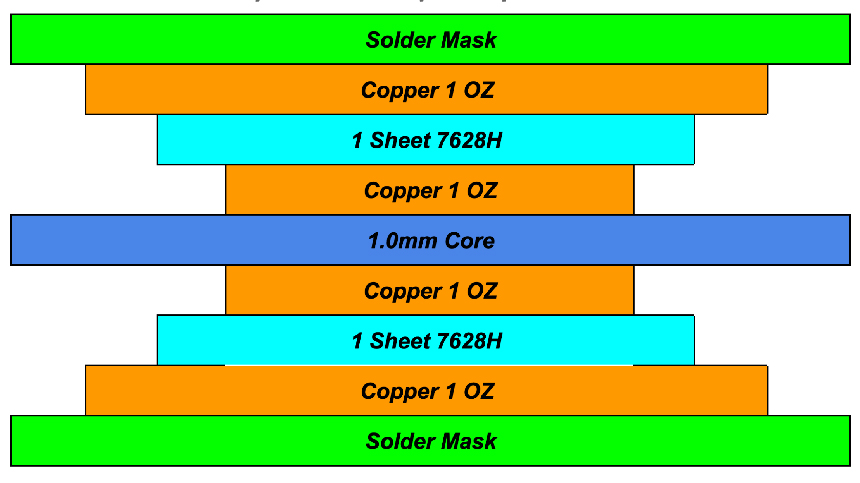
A multilayer PCB stackup defines how copper layers, dielectric materials, and prepregs are arranged within a printed circuit board. In modern electronics, multilayer PCB stackup design directly affects signal integrity, impedance control, thermal performance, and manufacturing yield.
This article explains multilayer PCB stackup from a manufacturing-oriented perspective, using structured tables to show how stackup decisions translate into real production capability.
What Is a Multilayer PCB Stackup?
A multilayer PCB stackup is the physical layer arrangement of:
-
Signal layers
-
Power and ground planes
-
Core and prepreg dielectric layers
It determines the electrical, mechanical, and thermal behavior of the finished PCB.
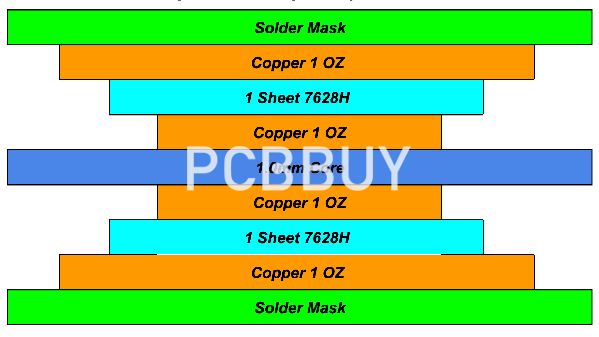
Typical Multilayer PCB Stackup Structures
|
Layer Count |
Common Stackup Type |
Typical Application |
|
4-layer |
Signal / Plane / Plane / Signal |
Industrial control, power boards |
|
6-layer |
Signal / Plane / Signal / Signal / Plane / Signal |
Consumer electronics |
|
8-layer |
Signal / Plane / Signal / Plane / Plane / Signal / Plane / Signal |
High-speed digital |
|
10+ layer |
Multiple signal + plane pairs |
Servers, networking, RF systems |
Higher layer counts require tighter lamination and registration control.
Core Components of a Multilayer PCB Stackup
|
Component |
Function |
Manufacturing Consideration |
|
Core |
Mechanical strength |
Thickness tolerance |
|
Prepreg |
Bonding layers |
Resin flow control |
|
Copper foil |
Conductive paths |
Copper weight consistency |
|
Plane layers |
Power & grounding |
Copper balance |
Each component contributes to stackup stability and impedance repeatability.
Symmetrical vs Asymmetrical Stackup Design
|
Stackup Type |
Characteristics |
Manufacturing Impact |
|
Symmetrical |
Balanced layer distribution |
Reduced warpage |
|
Asymmetrical |
Uneven copper or dielectric |
Higher deformation risk |
From a manufacturing standpoint, symmetrical stackups are always preferred for multilayer PCBs.
Stackup and Signal Integrity Relationship
|
Stackup Parameter |
Impact on Performance |
|
Dielectric thickness |
Impedance stability |
|
Reference plane distance |
Crosstalk control |
|
Layer pairing |
EMI suppression |
|
Copper roughness |
High-frequency loss |
Stackup optimization is a core requirement for high-speed PCB manufacturing.
Stackup Control Challenges in Multilayer PCB Manufacturing
|
Challenge |
Root Cause |
Control Method |
|
Impedance drift |
Dielectric variation |
Stackup locking |
|
Layer misregistration |
Lamination shift |
Optical alignment |
|
Warpage |
Copper imbalance |
Copper balancing |
|
Delamination |
Poor resin flow |
Controlled lamination profiles |
Manufacturers must manage these risks before mass production.
High-Layer Multilayer PCB Stackup Considerations
|
Aspect |
Low Layer Count |
High Layer Count |
|
Lamination cycles |
Single |
Multiple |
|
Resin flow risk |
Low |
High |
|
Registration tolerance |
Wider |
Tighter |
|
Yield sensitivity |
Moderate |
High |
This is where manufacturing experience becomes critical.
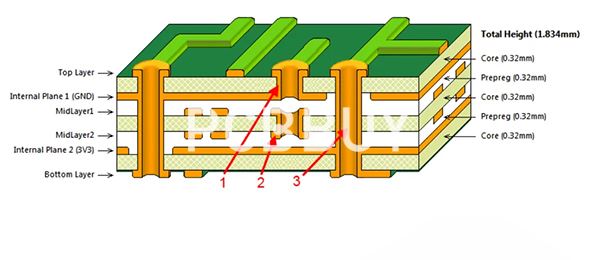
How PCBBUY Handles Multilayer PCB Stackup Engineering?
PCBBUY treats multilayer PCB stackup as a manufacturing-controlled system, not just a design document:
|
Stackup Control Area |
Execution Approach |
|
Stackup review |
Pre-production engineering validation |
|
Material control |
Qualified core & prepreg systems |
|
Lamination |
Optimized pressure and temperature curves |
|
Verification |
Cross-section and impedance validation |
This ensures stackup consistency from prototype to volume production.
Multilayer PCB Stackup Design Best Practices (Summary)
|
Best Practice |
Benefit |
|
Use symmetrical stackups |
Reduced warpage |
|
Lock dielectric thickness |
Stable impedance |
|
Balance copper distribution |
Higher yield |
|
Involve manufacturer early |
Fewer redesigns |
Conclusion
A well-engineered multilayer PCB stackup is the foundation of reliable PCB manufacturing. Electrical performance, mechanical stability, and production yield all depend on how layers are structured and controlled.
By integrating stackup design with manufacturing execution, multilayer PCBs achieve predictable quality and long-term reliability.
FAQ
What is the biggest mistake in multilayer PCB stackup design?
Ignoring manufacturing tolerances and assuming theoretical stackups will translate directly into production results.
How early should stackup be finalized?
Before impedance routing and ideally with manufacturer involvement.
Is symmetrical stackup mandatory?
It is strongly recommended, especially for 6-layer and above PCBs.
Can stackup changes affect PCB cost?
Yes. Material selection, lamination cycles, and layer count directly influence cost.
Does stackup affect PCB yield?
Absolutely. Poor stackup design increases warpage, delamination, and impedance failures.
Industry Category