PCB Material Selection for High Frequency Applications
By: 03/31/2026 14:32
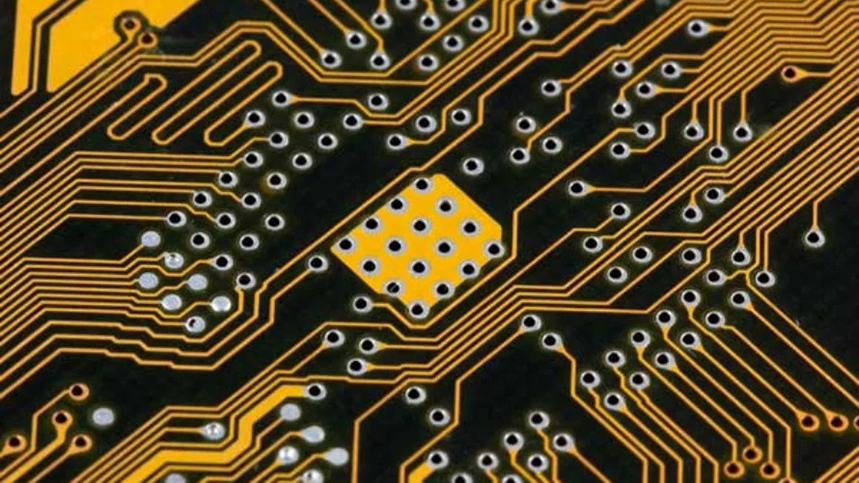
As electronic systems continue to move toward higher frequencies, faster data rates, and lower signal margins, PCB material selection for high frequency applications has become a critical factor affecting signal integrity, loss performance, and long-term reliability.
For professional PCB manufacturers, high-frequency material capability reflects not only material knowledge, but also processing experience, impedance control, and yield stability. This article explains how PCB materials are selected for high-frequency applications and how manufacturers support these designs in production.
What Defines a High Frequency PCB Application?
High-frequency PCB applications typically operate in environments where signal behavior is strongly affected by dielectric properties, including:
-
RF and microwave circuits
-
High-speed digital (multi-Gbps) systems
-
Antennas and wireless modules
-
Radar and communication infrastructure

Key Material Properties for High Frequency PCBs
|
Material Property |
Description |
Impact on Performance |
|
Dielectric constant (Dk) |
Signal propagation speed |
Impedance stability |
|
Dissipation factor (Df) |
Dielectric loss |
Signal attenuation |
|
Glass weave style |
Fiber distribution |
Skew & consistency |
|
Thermal stability (Tg) |
Resistance to heat |
Reliability |
|
CTE (Z-axis) |
Expansion under heat |
Via integrity |
|
Moisture absorption |
Water uptake |
Loss & impedance drift |
Common PCB Materials Used in High Frequency Applications
|
Material Category |
Typical Characteristics |
Application Range |
|
Standard FR-4 (low-loss grades) |
Moderate Dk, improved Df |
Lower GHz range |
|
High-speed FR-4 |
Controlled Dk/Df |
High-speed digital |
|
Hydrocarbon ceramic laminates |
Very low loss |
RF / microwave |
|
PTFE-based materials |
Ultra-low Df |
High-frequency RF |
|
Mixed-material stack-ups |
Hybrid cores & prepregs |
Cost-performance balance |
PCB Material Selection for High Frequency Applications – Manufacturing Perspective
1. Electrical Performance vs. Manufacturability
|
Consideration |
Engineering Approach |
Manufacturing Benefit |
|
Target frequency |
Match Dk/Df to frequency band |
Predictable performance |
|
Impedance tolerance |
Material consistency control |
First-pass success |
|
Loss budget |
Low-Df material selection |
Improved signal quality |
2. Stack-Up Design & Material Compatibility
|
Control Method |
Manufacturing Practice |
Capability Benefit |
|
Material pairing |
Compatible core & prepreg systems |
Stable lamination |
|
Hybrid stack-ups |
RF layers + standard FR-4 |
Cost optimization |
|
Thickness control |
Tight dielectric tolerance |
Impedance accuracy |
3. Processing Challenges of High Frequency Materials
|
Challenge |
Manufacturing Control |
Capability Indicator |
|
Soft material handling |
Dedicated drilling parameters |
Clean hole walls |
|
Smear & adhesion |
Plasma desmear optimization |
Reliable vias |
|
Copper roughness |
Low-profile copper foils |
Reduced insertion loss |
|
Lamination behavior |
Custom press profiles |
Delamination control |
4. Impedance Control & Signal Integrity Assurance
|
Method |
Manufacturing Practice |
Performance Benefit |
|
Field solver simulation |
Pre-production modeling |
Accurate impedance |
|
Controlled etching |
Line width compensation |
Geometry consistency |
|
Test coupons |
Embedded impedance coupons |
Real measurement |
|
TDR testing |
Time-domain reflectometry |
Validation & traceability |
5. Reliability Considerations for High Frequency PCBs
|
Reliability Factor |
Manufacturing Control |
Risk Reduction |
|
Thermal cycling |
Low-CTE material choice |
Via durability |
|
Moisture resistance |
Material pre-baking & storage |
Stable Df |
|
Surface finish selection |
ENIG / ENEPIG / OSP matching |
Signal integrity |
|
Assembly compatibility |
Lead-free reflow simulation |
Process stability |
Typical High Frequency Applications & Material Expectations
|
Application |
Frequency Range |
Material Expectation |
|
RF front-end modules |
GHz range |
Ultra-low Df |
|
High-speed networking |
Multi-Gbps |
Tight impedance |
|
Automotive radar |
mmWave |
Thermal stability |
|
Industrial communication |
Long-term operation |
Reliability-focused |
|
Wireless antennas |
Frequency-sensitive |
Consistent Dk |
Why PCB Material Selection Reflects Manufacturing Capability?
A PCB manufacturer capable of supporting high-frequency material selection demonstrates:
-
Deep understanding of dielectric behavior
-
Experience with advanced and hybrid material systems
-
Strong impedance control and process repeatability
-
Proven yield and reliability management
These capabilities are essential for RF, high-speed digital, and mixed-signal PCB projects.
FAQ
FAQ 1: Why is PCB material selection critical for high frequency applications?
At high frequencies, signal loss, impedance variation, and dielectric behavior dominate performance, making material choice essential.
FAQ 2: Is standard FR-4 suitable for high frequency PCBs?
Standard FR-4 has limitations at higher frequencies, but low-loss or high-speed FR-4 grades can be suitable for certain GHz-range applications.
FAQ 3: What is the most important material parameter for high frequency?
Both Dk and Df are critical—Dk affects impedance, while Df determines signal loss.
FAQ 4: Can hybrid PCB materials be used?
Yes. Many designs use hybrid stack-ups, combining high-frequency materials for critical layers and standard FR-4 for others to balance cost and performance.
FAQ 5: How do PCB manufacturers ensure impedance accuracy with special materials?
Through stack-up simulation, controlled etching, tight lamination thickness control, and TDR testing.
FAQ 6: Do high frequency PCB materials increase cost?
Material cost and processing complexity are higher, but proper selection reduces redesign risk, improves performance, and lowers total system cost.
Conclusion
PCB material selection for high frequency applications is a balance between electrical performance, manufacturability, reliability, and cost. Manufacturers with strong material engineering and process control capabilities can support stable, repeatable, and high-performance high-frequency PCBs.
Industry Category