PCB Process Capability Index (CPK) Control in Advanced PCB Manufacturing
By:PCBBUY 05/27/2026 16:20
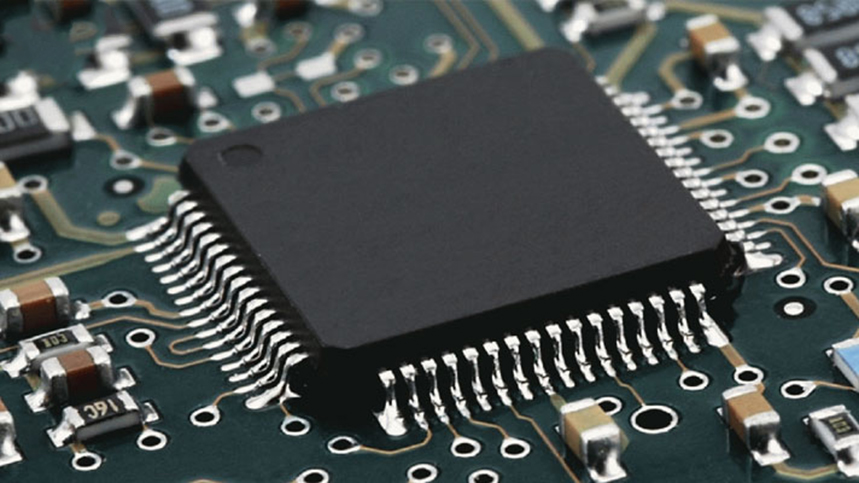
In modern PCB fabrication, process stability and consistency are just as critical as advanced equipment.
One of the most widely used statistical tools to evaluate manufacturing stability is the Process Capability Index (CPK).
At PCBBUY, pcb process capability index cpk control is deeply integrated into daily production management, ensuring high-yield, repeatable quality for standard, HDI, and high-reliability PCB projects.
What Is PCB Process Capability Index (CPK)?
CPK (Process Capability Index) is a statistical metric that measures how well a manufacturing process can produce outputs within specified tolerance limits.
In PCB manufacturing, CPK is commonly applied to:
-
Copper thickness control
-
Line width / spacing accuracy
-
Hole diameter and PTH copper thickness
-
Board thickness and impedance tolerance
-
Solder mask registration
A higher CPK value indicates a more stable and capable process.

Typical CPK Value Interpretation in PCB Fabrication
|
CPK Value Range |
Process Status |
Manufacturing Meaning |
|
CPK < 1.00 |
Not capable |
High risk of out-of-spec boards |
|
1.00 ≤ CPK < 1.33 |
Marginal |
Acceptable for low-risk products |
|
1.33 ≤ CPK < 1.67 |
Capable |
Stable production, industry standard |
|
CPK ≥ 1.67 |
Highly capable |
Preferred for automotive, medical, aerospace |
|
CPK ≥ 2.00 |
World-class |
Ultra-stable mass production |
PCBBUY typically maintains CPK ≥ 1.67 on key critical processes.
Key PCB Processes Controlled by CPK at PCBBUY
|
PCB Process |
Controlled Parameter |
Typical Tolerance |
Target CPK |
|
Inner Layer Imaging |
Line width / spacing |
±10–15 µm |
≥1.67 |
|
Outer Layer Etching |
Trace geometry |
±10 µm |
≥1.67 |
|
PTH Drilling |
Hole diameter |
±0.05 mm |
≥1.67 |
|
Plated Through Hole |
Copper thickness |
≥20–25 µm |
≥1.67 |
|
Lamination |
Board thickness |
±10% |
≥1.67 |
|
Impedance Control |
Differential / Single-ended |
±5–10% |
≥1.67 |
|
Solder Mask |
Registration accuracy |
±50 µm |
≥1.67 |
This pcb process capability index cpk control system ensures consistent electrical and mechanical performance.

How PCBBUY Implements CPK Control in PCB Manufacturing?
|
Control Stage |
CPK Implementation Method |
|
Incoming Material |
Statistical inspection of copper foil, prepreg, laminates |
|
Process Setup |
Golden sample validation and baseline CPK calculation |
|
In-Process Control |
SPC charts, real-time deviation alarms |
|
Equipment Calibration |
Periodic CPK re-verification after maintenance |
|
Final Inspection |
CPK-based acceptance for critical parameters |
|
Continuous Improvement |
Low-CPK root cause analysis and corrective action |
This closed-loop control system allows PCBBUY to maintain long-term process stability, not just short-term pass rates.
CPK Control for High-Reliability and High-Speed PCBs
For advanced applications such as:
-
High-speed digital PCBs
-
Differential impedance controlled boards
-
HDI and microvia structures
-
Automotive and industrial control PCBs
CPK control becomes especially critical.
PCBBUY applies enhanced CPK monitoring to:
-
Impedance deviation vs. copper roughness
-
Via hole copper distribution
-
Laser-drilled microvia consistency
-
Layer-to-layer registration accuracy
This approach reduces electrical variation and improves signal integrity.

Why PCB Buyers Should Care About CPK Control?
|
Buyer Concern |
How CPK Control Helps |
|
Batch-to-batch consistency |
Ensures repeatable electrical performance |
|
Long-term supply stability |
Reduces yield fluctuation risks |
|
Certification requirements |
Supports IATF16949, ISO, IPC compliance |
|
Reduced field failure |
Lowers defect escape probability |
|
Easier design tolerance |
Enables tighter design margins |
Choosing a PCB manufacturer with strong pcb process capability index cpk control directly lowers total project risk.
FAQ
What is a good CPK value in PCB manufacturing?
A CPK ≥ 1.33 is generally acceptable, while CPK ≥ 1.67 is preferred for high-reliability PCB applications.
How is CPK different from CP in PCB processes?
CP measures process spread only, while CPK considers both spread and process centering, making it more practical for PCB tolerance control.
Does CPK affect impedance-controlled PCBs?
Yes. Stable CPK values directly impact trace geometry consistency, which is critical for differential impedance PCB fabrication.
Can PCB factories provide CPK reports?
Professional manufacturers like PCBBUY can provide CPK data or SPC charts for critical parameters upon request.
Is CPK control important for small-batch PCB orders?
Absolutely. Even for prototypes or small batches, CPK helps ensure first-pass success and design validation accuracy.
How does CPK reduce PCB defect rates?
By statistically controlling variation, CPK minimizes over-etching, under-plating, hole wall defects, and impedance drift.

Conclusion
A robust pcb process capability index cpk control system is a key indicator of a PCB manufacturer’s true engineering capability.
Through statistical process control, real-time monitoring, and continuous improvement, PCBBUY delivers:
-
Stable mass production
-
Tight tolerance control
-
Reliable electrical performance
For engineers and buyers seeking long-term quality consistency, CPK-controlled PCB fabrication is not optional—it is essential.
Industry Category