PCB Thermal Cycling Reliability Test: Ensuring Long-Term Performance
By:PCBBUY 05/22/2026 16:58
Overview of PCB Thermal Cycling Reliability Testing
|
Topic |
Professional Explanation |
|
What Is a PCB Thermal Cycling Reliability Test |
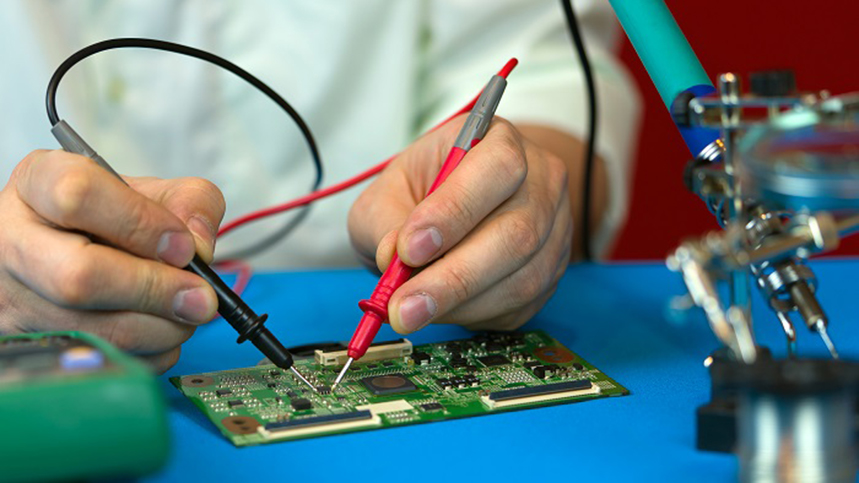
A PCB thermal cycling reliability test evaluates how printed circuit boards perform under repeated temperature changes, simulating real-world operating conditions where materials expand and contract. |
|
Purpose of Thermal Cycling |
The test identifies potential reliability risks such as via cracking, solder joint fatigue, delamination, and material degradation caused by thermal stress. |
|
Typical Test Conditions |
Thermal cycling usually involves alternating between high and low temperatures, such as -40°C to +125°C, over hundreds or thousands of cycles depending on application requirements. |
|
Importance in PCB Manufacturing |
Thermal cycling reliability testing is critical for PCBs used in harsh environments, ensuring long-term electrical and mechanical stability. |
Failure Mechanisms Revealed by PCB Thermal Cycling Tests
|
Failure Mode |
Description |
|
Via Barrel Cracking |
Repeated thermal expansion mismatch between copper and laminate materials can cause cracks in plated through holes or microvias. |
|
Solder Joint Fatigue |
Thermal cycling accelerates solder joint degradation, leading to intermittent connections or open circuits. |
|
Delamination |
Poor resin bonding or improper lamination can cause layer separation under thermal stress. |
|
Copper Trace Fatigue |
Continuous expansion and contraction may result in micro-cracks in copper traces over extended cycles. |

PCBBUY’s Manufacturing Capabilities to Improve Thermal Cycling Reliability
|
Process Area |
PCBBUY Engineering Practice |
|
Material Selection |
PCBBUY supports high-Tg and low-CTE laminate materials to reduce thermal expansion mismatch and improve thermal cycling performance. |
|
Via Structure Design |
Optimized via aspect ratios, reinforced copper thickness, and controlled microvia structures enhance resistance to thermal fatigue. |
|
Copper Plating Control |
Uniform and well-controlled copper plating improves ductility and reduces stress concentration during temperature cycling. |
|
Lamination Process Control |
Precise control of lamination temperature, pressure, and resin flow ensures strong interlayer bonding and minimizes delamination risk. |
|
Process Validation |
Cross-section analysis and reliability-focused inspections are conducted to validate PCB structures before mass production. |
How PCBBUY Integrates Thermal Cycling Reliability into Production?
|
Manufacturing Stage |
Reliability Integration |
|
Design Review |
Early DFM and reliability evaluation help identify thermal risk points in stack-up and via design. |
|
Prototype Validation |
Prototype boards undergo reliability-oriented process checks to verify structural robustness. |
|
Mass Production |
Stable, repeatable manufacturing processes ensure consistent thermal cycling performance across batches. |
|
Quality Assurance |
Continuous monitoring and process control help maintain long-term reliability for export-grade PCBs. |

Applications Requiring PCB Thermal Cycling Reliability Testing
|
Industry |
Application Examples |
|
Automotive Electronics |
Engine control units, battery management systems, and power modules exposed to extreme temperature changes. |
|
Industrial Control |
Equipment operating in outdoor or fluctuating thermal environments. |
|
Medical Devices |
Electronics requiring long-term reliability and stable performance. |
|
Aerospace & Defense |
Systems subjected to severe thermal stress during operation. |
|
High-Reliability Consumer Electronics |
Compact devices with high power density and heat generation. |
FAQ
Q1: What does a PCB thermal cycling reliability test measure?
A1: It measures a PCB’s ability to withstand repeated temperature changes without mechanical or electrical failure, focusing on vias, solder joints, and interlayer bonding.
Q2: How many thermal cycles are required for reliability testing?
A2: The number of cycles depends on application standards and customer requirements, typically ranging from several hundred to several thousand cycles.
Q3: Why is thermal cycling reliability important for multilayer PCBs?
A3: Multilayer PCBs have more interfaces and vias, making them more susceptible to thermal stress and expansion mismatch over repeated temperature changes.
Q4: Can PCBBUY help optimize PCB designs for thermal cycling reliability?
A4: Yes. PCBBUY provides engineering support including material selection, stack-up optimization, and via design recommendations to improve thermal cycling performance.
Q5: Is thermal cycling reliability testing required for all PCBs?
A5: While not mandatory for all applications, it is highly recommended for PCBs used in harsh environments or long-life products where reliability is critical.
Industry Category