PCB Thermal Stress Failure Analysis
By:PCBBUY 06/26/2026 14:36

Thermal stress is one of the most common root causes of PCB failure across the electronics industry. During fabrication, assembly, and field operation, PCBs are repeatedly exposed to temperature changes that generate mechanical stress inside the board structure.
A systematic PCB thermal stress failure analysis helps identify failure mechanisms early and ensures long-term reliability—especially for multilayer, high-density, and high-temperature applications.
Thermal stress behavior is evaluated and controlled through material engineering, process optimization, and reliability-oriented manufacturing.
What Is Thermal Stress in PCBs?
Thermal stress occurs when PCB materials expand and contract due to temperature changes. Because different materials (copper, resin, glass fiber) have different thermal expansion rates, internal stress builds up at material interfaces.
Thermal stress typically arises during:
-
PCB lamination and curing
-
Lead-free reflow soldering
-
Selective soldering and rework
-
Thermal cycling in real-world operation
If not properly controlled, thermal stress can lead to latent or immediate failures.

Common PCB Failures Caused by Thermal Stress
1. Via and Plated Through-Hole Cracking
Repeated thermal expansion in the Z-axis places stress on copper barrels. Over time, this leads to:
-
Barrel cracking
-
Intermittent opens
-
Complete electrical failure
This is one of the most critical reliability risks in multilayer PCBs.
2. Delamination and Blistering
Thermal stress weakens resin-to-copper adhesion. Combined with moisture or high reflow temperatures, this can cause:
-
Internal layer separation
-
Surface blistering
-
Pad lifting
Once delamination occurs, PCB reliability is permanently compromised.
3. Warpage and Assembly Defects
Uneven thermal expansion across PCB layers causes board deformation, resulting in:
-
Poor coplanarity during SMT
-
Head-in-pillow defects
-
Incomplete solder joints
These failures directly reduce assembly yield.
4. Long-Term Fatigue and Field Failures
Even if no visible damage occurs during manufacturing, repeated thermal cycling accelerates:
-
Micro-crack growth
-
Copper fatigue
-
Early field failure under operating conditions
Thermal Stress Failure Analysis Methods
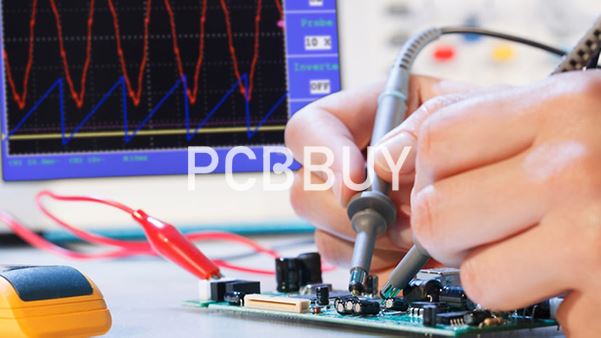
PCB thermal stress failure analysis combines physical inspection, electrical testing, and material evaluation.
|
Analysis Method |
Purpose |
Typical Findings |
|
Cross-section analysis |
Internal structural inspection |
Via cracks, delamination |
|
Thermal cycling test |
Simulate long-term stress |
Fatigue-related failures |
|
Reflow simulation |
SMT thermal impact evaluation |
Blistering, warpage |
|
X-ray inspection |
Non-destructive internal check |
Hidden voids, cracks |
|
Material property review |
CTE & Tg verification |
Material mismatch risks |
How PCBBUY Reduces Thermal Stress Failures?
PCBBUY applies a prevention-first approach rather than reactive failure correction.
Material & Stackup Engineering
-
High-Tg and low-Z-axis-expansion laminate options
-
Verified material compatibility for multilayer stackups
-
Balanced stackup design to reduce warpa
Process-Level Thermal Control
-
Precision lamination temperature and pressure profiles
-
Optimized drilling and copper plating hickness for via durability
-
Reflow-compatible PCB fabrication for ead-free assembly
Reliability-Oriented Manufacturing
-
Thermal stress validation for high-reliability projects
-
Moisture control and pre-bake procedures before SMT
-
Process traceability across critical fabrication steps
Thermal Stress Failure vs Prevention Strategy (Table)
|
Thermal Stress Failure |
Root Cause |
PCBBUY Manufacturing Control |
|
Via cracking |
Z-axis expansion mismatch |
High-Tg material + optimized plating |
|
Delamination |
Weak resin-copper bonding |
Controlled lamination process |
|
Warpage |
Unbalanced stackup |
Stackup optimization |
|
SMT solder defects |
Thermal deformation |
SMT-compatible PCB design |
|
Reduced service life |
Thermal fatigue |
Reliability-focused material selection |
Why Thermal Stress Analysis Matters for Overseas Buyers?
For global electronics brands, insufficient thermal stress control can result in:
-
Assembly yield loss
-
Early field failures
-
Costly warranty returns
-
Certification and compliance risks
A PCB manufacturer with thermal stress analysis capability provides predictable quality and long-term reliability.
FAQ
Q1: Is thermal stress failure visible during initial inspection?
Not always. Many thermal stress failures are latent and only appear after thermal cycling or field operation.
Q2: Are multilayer PCBs more vulnerable to thermal stress?
Yes. Increased thickness and layer count amplify Z-axis expansion stress and via fatigue risk.
Q3: Does high-Tg material completely prevent thermal stress failure?
No, but it significantly improves thermal resistance. Process control and stackup design remain critical.
Q4: Can thermal stress cause failures after SMT assembly?
Yes. Many failures occur during or after reflow soldering due to rapid temperature changes.
Q5: Does PCBBUY support thermal stress–sensitive applications?
Yes. PCBBUY offers material consultation, stackup optimization, and reliability-oriented manufacturing for thermally demanding applications.
Conclusion
A comprehensive PCB thermal stress failure analysis is essential for ensuring long-term reliability in modern electronics. Thermal stress is unavoidable—but failure is not.
By combining material science, process control, and reliability-focused manufacturing, PCBBUY delivers PCB solutions engineered to withstand thermal challenges throughout the product lifecycle.
Industry Category