Registration Accuracy in High Layer PCB Fabrication
By:PCBBUY 03/30/2026 11:26
As PCB designs continue to move toward higher layer counts, finer line widths, and tighter tolerances, registration accuracy in high layer PCB fabrication has become a key indicator of a manufacturer’s technical capability.
Poor layer registration can lead to inner layer shorts, annular ring reduction, via breakout, impedance deviation, and yield loss. This article explains why registration accuracy is difficult to control in high layer PCBs and how professional manufacturers ensure precise and repeatable alignment.
What Is Registration Accuracy in High Layer PCBs?
Registration accuracy refers to the positional alignment precision between multiple PCB layers, including:
-
Inner layer to inner layer
-
Inner layer to drilled vias
-
Inner layer to outer layer patterns
In high layer PCBs (typically 10 layers and above), even minor misalignment can be amplified across multiple lamination cycles.
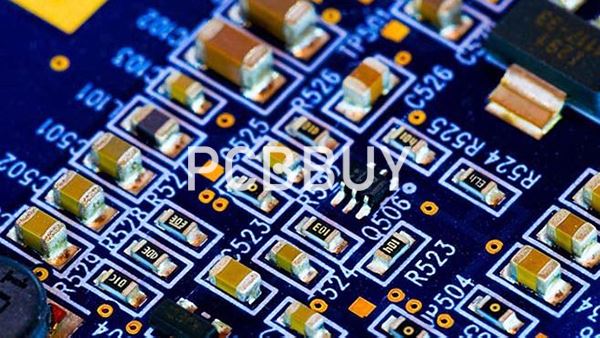
Why Registration Accuracy Is Critical in High Layer PCB Fabrication
|
Impact Area |
Effect of Poor Registration |
|
Electrical reliability |
Reduced annular ring, open circuits |
|
Via integrity |
Via breakout, weak interconnections |
|
Signal integrity |
Impedance inconsistency |
|
Manufacturing yield |
Increased scrap and rework |
|
Long-term reliability |
Latent failures under stress |
Common Causes of Registration Errors in High Layer PCBs
|
Cause Category |
Description |
Resulting Risk |
|
Material movement |
Thermal expansion/shrinkage of cores |
Layer offset |
|
Lamination stress |
Uneven pressure or temperature |
Accumulated misalignment |
|
Imaging deviation |
Exposure or scaling error |
Pattern mismatch |
|
Drilling tolerance |
Tool wear or positional drift |
Via-to-pad misregistration |
|
Stack-up imbalance |
Asymmetrical layer structure |
Warpage-related shift |
Registration Accuracy in High Layer PCB Fabrication – Key Control Methods
1. Inner Layer Imaging & Scaling Control
|
Control Method |
Manufacturing Practice |
Accuracy Benefit |
|
LDI exposure |
Laser direct imaging with fine resolution |
High pattern precision |
|
X/Y scaling compensation |
Pre-adjustment for material shrinkage |
Pattern-to-pattern match |
|
Inner layer AOI |
100% inspection before lamination |
Defect isolation |
2. Material Behavior Management
|
Control Method |
Manufacturing Practice |
Accuracy Benefit |
|
Material characterization |
Expansion & shrinkage data modeling |
Predictable alignment |
|
Controlled storage conditions |
Temperature & humidity control |
Stable material dimensions |
|
Matched core & prepreg systems |
Compatible resin behavior |
Reduced internal stress |
3. Lamination Process Optimization
|
Control Method |
Manufacturing Practice |
Accuracy Benefit |
|
Multi-stage lamination |
Stepwise pressure & temperature ramps |
Reduced layer shift |
|
Pin or optical registration |
Precise layer alignment before press |
Improved repeatability |
|
Controlled cooling rate |
Gradual stress release |
Minimizes distortion |
4. High-Precision Drilling & Registration Verification
|
Control Method |
Manufacturing Practice |
Accuracy Benefit |
|
CNC drilling calibration |
Regular positional accuracy checks |
Precise hole placement |
|
X-ray drilling alignment |
Inner layer reference targeting |
Accurate via registration |
|
Tool life management |
Controlled drill wear |
Consistent results |
5. Post-Lamination Inspection & Data Feedback
|
Inspection Method |
Purpose |
Accuracy Assurance |
|
X-ray inspection |
Verify inner layer alignment |
Hidden defect detection |
|
Microsection analysis |
Check annular ring symmetry |
Structural validation |
|
SPC data tracking |
Trend analysis across batches |
Continuous improvement |
Typical Registration Accuracy Targets in High Layer PCB Fabrication
|
PCB Type |
Typical Registration Capability |
|
Standard multilayer PCB |
±75 μm |
|
High layer count PCB |
±50 μm |
|
HDI / fine-line multilayer |
±30 μm or better |
(Actual capability depends on material system, layer count, and design complexity.)
Why Registration Accuracy Reflects PCB Manufacturing Capability
Strong registration accuracy control demonstrates that a PCB manufacturer has:
-
Advanced imaging and scaling control technology
-
Deep understanding of material behavior
-
Mature lamination and drilling processes
-
Data-driven process monitoring and optimization
These capabilities are essential for high layer count, high-density, and impedance-controlled PCBs.

FAQ
FAQ 1: What is registration accuracy in PCB fabrication?
Registration accuracy refers to how precisely multiple PCB layers are aligned with each other during fabrication.
FAQ 2: Why is registration accuracy more difficult in high layer PCBs?
High layer PCBs undergo multiple lamination cycles, and material expansion, shrinkage, and stress accumulation increase alignment difficulty.
FAQ 3: What happens if registration accuracy is poor?
Poor registration can cause via breakout, reduced annular rings, shorts, impedance variation, and lower manufacturing yield.
FAQ 4: How do PCB manufacturers improve registration accuracy?
Manufacturers improve registration accuracy through LDI imaging, material scaling compensation, optimized lamination cycles, X-ray drilling, and comprehensive inspection.
FAQ 5: What registration tolerance can professional PCB factories achieve?
Professional PCB factories typically achieve ±50 μm for high layer PCBs, and ±30 μm or better for advanced HDI structures.
FAQ 6: Does better registration accuracy increase PCB cost?
It may slightly increase cost due to advanced equipment and process control, but it significantly reduces scrap, rework, and reliability risks.
Conclusion
Registration accuracy in high layer PCB fabrication is the result of systematic control over materials, imaging, lamination, drilling, and inspection. Manufacturers with strong registration capability can deliver higher yield, tighter tolerances, and more reliable multilayer PCBs for demanding applications.
Industry Category