SMT Stencil Design Optimization for Fine Pitch Components
By:PCBBUY 04/30/2026 14:57
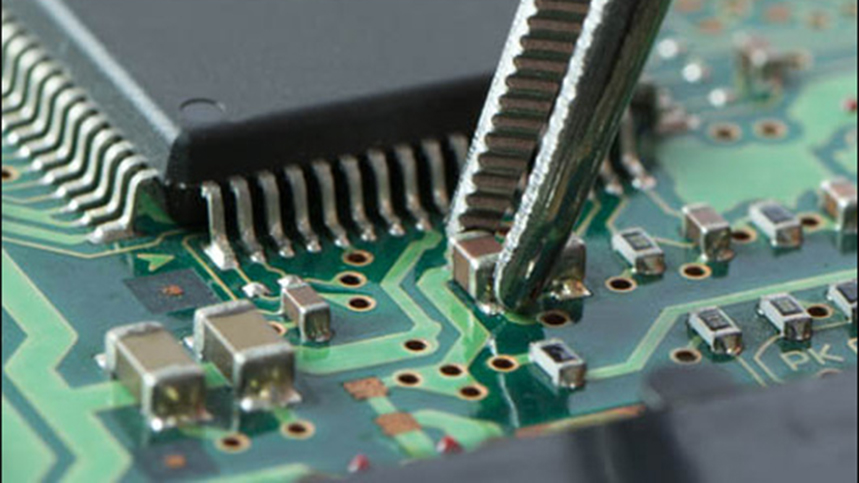
As electronic assemblies move toward miniaturization and higher I/O density, fine pitch components such as QFN, fine-pitch QFP, and small-pitch BGAs place extreme demands on SMT processes.
Among all SMT steps, SMT stencil design optimization for fine pitch components is one of the most critical factors affecting solder paste printing quality, assembly yield, and long-term reliability.
Optimized stencil design reflects not only printing know-how, but also a PCBA manufacturer’s DFM depth, process control, and mass production experience.
What Is SMT Stencil Design?
An SMT stencil is a laser-cut metal template used to deposit solder paste onto PCB pads before component placement.
|
Item |
Description |
|
Material |
Stainless steel / electroformed nickel |
|
Thickness |
Typically 0.08–0.15 mm |
|
Function |
Control solder paste volume |
|
Key role |
Enable accurate reflow soldering |
Why Fine Pitch Components Require Stencil Optimization?
|
Fine Pitch Challenge |
Printing Risk |
|
Small pad spacing |
Solder bridging |
|
Reduced pad area |
Insufficient solder |
|
High pin density |
Paste slumping |
|
Tight tolerance |
Yield sensitivity |
For fine pitch assemblies, standard stencil designs are often insufficient—process optimization is essential.

Typical Fine Pitch Components Requiring Optimized Stencils
|
Component Type |
Typical Pitch |
|
Fine-pitch QFP |
0.4–0.5 mm |
|
QFN |
≤0.5 mm |
|
CSP |
≤0.5 mm |
|
Small-pitch BGA |
0.4–0.8 mm |
|
Micro-BGA |
≤0.4 mm |
Key SMT Stencil Design Optimization Methods
1. Stencil Thickness Selection
|
Thickness |
Application |
Optimization Value |
|
0.08–0.10 mm |
Ultra-fine pitch |
Reduced bridging |
|
0.10–0.12 mm |
Mixed fine pitch |
Balanced solder volume |
|
Step stencil |
Mixed technology boards |
Process flexibility |
2. Aperture Size & Shape Optimization
|
Aperture Design |
Purpose |
Benefit |
|
Reduced aperture |
Control solder volume |
Prevent bridging |
|
Rounded corners |
Improve paste release |
Clean deposits |
|
Home-plate design |
QFN optimization |
Reduced voiding |
|
Window pane |
Large thermal pads |
Uniform soldering |
3. Area Ratio & Aspect Ratio Control
|
Parameter |
Typical Requirement |
Process Impact |
|
Area ratio |
≥0.66 |
Reliable paste release |
|
Aspect ratio |
≥1.5 |
Printing consistency |
|
Aperture wall quality |
Smooth laser cut |
Reduced clogging |
4. Step Stencil & Local Thickness Control
|
Method |
Application |
Manufacturing Value |
|
Step-down stencil |
Fine pitch areas |
Lower solder volume |
|
Step-up stencil |
Power components |
Strong joints |
|
Hybrid stencil |
Mixed BOM |
One-pass printing |
5. Surface Treatment & Fabrication Quality
|
Control Aspect |
Manufacturing Practice |
Printing Benefit |
|
Electropolishing |
Smooth aperture walls |
Better paste release |
|
Laser cutting accuracy |
Tight tolerance |
Consistent deposits |
|
Cleaning process |
Paste residue control |
Stable printing |
SMT Stencil Design + Process Parameter Matching
|
Process Parameter |
Optimization Focus |
|
Solder paste type |
Particle size for fine pitch |
|
Squeegee pressure |
Avoid paste smearing |
|
Print speed |
Stable paste roll |
|
Separation speed |
Clean release |
|
Cleaning frequency |
Prevent aperture clogging |
Stencil design and printing parameters must be optimized together to achieve stable results.
Inspection & Verification for Fine Pitch Printing
|
Inspection Method |
Purpose |
Quality Assurance |
|
SPI (3D solder paste inspection) |
Volume & height check |
Early defect detection |
|
AOI |
Bridge & offset detection |
Assembly quality |
|
First article verification |
Process confirmation |
Mass production readiness |
|
SPC monitoring |
Trend stability |
Yield protection |
Common Fine Pitch SMT Defects & Stencil Solutions
|
Defect |
Root Cause |
Stencil Optimization |
|
Solder bridging |
Excess paste |
Reduced aperture |
|
Insufficient solder |
Small pad area |
Aperture tuning |
|
Tombstoning |
Imbalanced paste |
Symmetrical design |
|
Voiding |
Trapped flux |
Home-plate aperture |
|
Paste smearing |
Poor release |
Polished stencil |
What Stencil Optimization Capability Reveals About a PCBA Manufacturer?
A manufacturer proficient in SMT stencil design optimization for fine pitch components demonstrates:
-
Strong DFM and assembly engineering
-
Mature fine pitch SMT process control
-
Deep understanding of printing–placement–reflow interaction
-
Stable mass production yield
-
Readiness for high-density and advanced assemblies
This capability directly impacts first-pass yield, rework rate, and long-term reliability.
FAQ
FAQ 1: Why is stencil design critical for fine pitch SMT?
Because fine pitch pads are highly sensitive to solder volume variation, leading to bridging or opens.
FAQ 2: What stencil thickness is best for fine pitch components?
Typically 0.08–0.12 mm, depending on component pitch and board complexity.
FAQ 3: What is the area ratio requirement for fine pitch apertures?
An area ratio of ≥0.66 is generally required for consistent solder paste release.
FAQ 4: When is a step stencil needed?
When a PCB contains both fine pitch components and large power devices, requiring different solder volumes.
FAQ 5: How is stencil performance verified?
Through SPI measurement, AOI inspection, and first article validation.
FAQ 6: Does stencil optimization increase assembly cost?
It slightly increases upfront engineering effort but significantly reduces defects, rework, and scrap.

Conclusion
SMT stencil design optimization for fine pitch components is a cornerstone of high-quality PCBA manufacturing. Manufacturers with advanced stencil engineering and printing control can deliver stable, repeatable, and high-yield fine pitch assemblies, making them reliable partners for global electronics production.
Industry Category