Sequential Lamination Challenges in Multilayer PCB
By:PCBBUY 04/24/2026 14:43
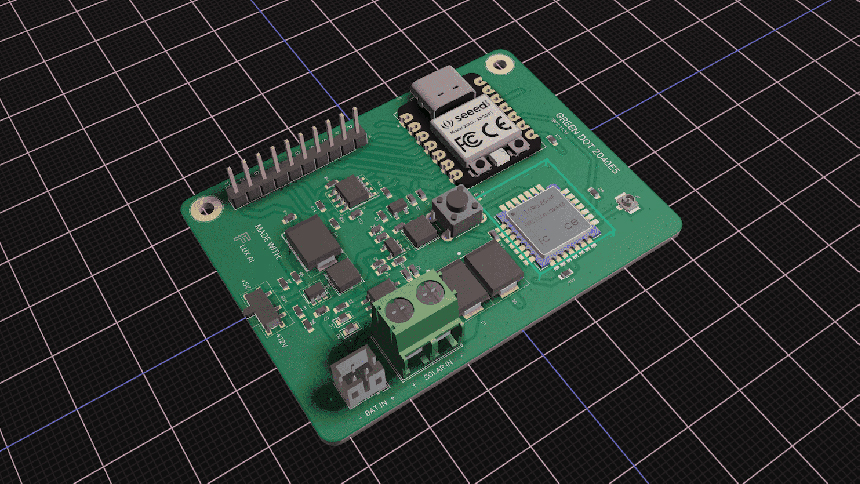
As PCB designs evolve toward higher layer counts, HDI architectures, and complex interconnections, sequential lamination has become a critical manufacturing process. However, sequential lamination challenges in multilayer PCB manufacturing represent one of the highest technical barriers in the industry.
Mastering these challenges is a clear indicator of a PCB manufacturer’s process maturity, yield control, and reliability assurance capability.
What Is Sequential Lamination in Multilayer PCB?
Sequential lamination is a manufacturing process where multiple lamination cycles are performed to build complex multilayer PCBs, especially those incorporating blind vias, buried vias, and stacked microvias.
|
Item |
Description |
|
Lamination cycles |
Two or more |
|
Typical applications |
HDI, high-layer-count PCBs |
|
Key purpose |
Enable complex via structures |
|
Technical difficulty |
Very high |
Why Sequential Lamination Is Necessary?
|
Design Requirement |
Why Sequential Lamination Is Needed |
|
Blind & buried vias |
Cannot be formed in one lamination |
|
Stacked microvias |
Require step-by-step build-up |
|
High wiring density |
Controlled layer construction |
|
Thin dielectric layers |
Precision resin flow control |
Major Sequential Lamination Challenges in Multilayer PCB
|
Challenge Area |
Manufacturing Risk |
|
Layer-to-layer alignment |
Registration errors |
|
Material shrinkage accumulation |
Dimensional deviation |
|
Resin flow inconsistency |
Voids or delamination |
|
Thermal stress buildup |
Via cracking |
|
Process complexity |
Yield reduction |
Key Sequential Lamination Challenges & Control Strategies
1. Layer Registration Accuracy Across Multiple Laminations
|
Challenge |
Control Method |
Manufacturing Value |
|
Cumulative misalignment |
Optical alignment & X-ray targeting |
Stable via-to-pad alignment |
|
Tooling hole deviation |
Precision CNC tooling |
Repeatable stacking |
|
Dimensional drift |
Scale compensation modeling |
Registration accuracy |
2. Material Behavior Under Repeated Thermal Cycles
|
Challenge |
Control Method |
Reliability Benefit |
|
Dielectric shrinkage |
Low-shrinkage materials |
Dimensional stability |
|
CTE mismatch |
Balanced stack-up design |
Stress reduction |
|
Resin aging |
Controlled lamination profiles |
Consistent bonding |
3. Resin Flow & Bonding Quality Control
|
Challenge |
Control Method |
Process Benefit |
|
Resin starvation |
Prepreg selection |
Strong interlayer adhesion |
|
Excessive resin flow |
Pressure zoning |
Flat panels |
|
Void formation |
Vacuum lamination |
Reduced defects |
4. Via Reliability After Sequential Lamination
|
Challenge |
Control Method |
Reliability Impact |
|
Via cracking |
Copper thickness optimization |
Thermal endurance |
|
Pad pull-off |
Surface treatment control |
Strong bonding |
|
Barrel separation |
CTE matching |
Long-term reliability |
5. Process Complexity & Yield Management
|
Challenge |
Control Method |
Production Value |
|
Increased process steps |
Standardized SOPs |
Reduced variation |
|
Rework difficulty |
Front-end DFM analysis |
First-pass success |
|
Yield fluctuation |
SPC monitoring |
Stable mass production |
Sequential Lamination Process Flow Overview
|
Step |
Key Control Point |
|
Inner layer fabrication |
Dimensional compensation |
|
First lamination |
Pressure & temperature uniformity |
|
Laser drilling |
Via geometry consistency |
|
Plating & filling |
Void-free copper |
|
Subsequent lamination |
Alignment & stress control |
|
Final drilling & finishing |
Structural integrity |
Typical Sequential Lamination Capability Indicators
|
Capability Item |
Typical Benchmark |
|
Lamination cycles |
2–4 cycles |
|
Registration tolerance |
±25–40 μm |
|
Microvia stacking |
Up to 3 levels |
|
Reliability standard |
IPC Class 2 / 3 |
|
Yield stability |
Production-grade consistency |
Applications Requiring Strong Sequential Lamination Capability
|
Application |
Reason |
|
HDI consumer electronics |
Fine pitch & stacked vias |
|
Automotive electronics |
Thermal reliability |
|
Industrial control systems |
Long-term stability |
|
Communication hardware |
High interconnect density |
|
Medical electronics |
Process consistency |
What Sequential Lamination Capability Reveals About a PCB Manufacturer?
A manufacturer that effectively overcomes sequential lamination challenges in multilayer PCB demonstrates:
-
Advanced process modeling and compensation
-
Mature HDI build-up technology
-
Strong material engineering expertise
-
Reliable via and interconnect performance
-
Proven mass production yield control
These capabilities directly translate into lower risk, faster ramp-up, and higher product reliability for customers.

FAQ
FAQ 1: What is sequential lamination in multilayer PCB manufacturing?
It is a process involving multiple lamination cycles to build complex multilayer PCBs with blind, buried, or stacked vias.
FAQ 2: Why is sequential lamination technically challenging?
Because each lamination adds thermal stress, dimensional variation, and alignment difficulty, increasing manufacturing complexity.
FAQ 3: What are the main risks of poor sequential lamination control?
Misregistration, delamination, via failure, reduced yield, and long-term reliability issues.
FAQ 4: How are alignment issues controlled in sequential lamination?
Through optical alignment, X-ray targeting, tooling accuracy, and dimensional compensation modeling.
FAQ 5: Does sequential lamination increase PCB cost?
It increases process complexity, but reduces overall cost by enabling high-density designs with stable reliability and yield.
FAQ 6: Is sequential lamination necessary for HDI PCB?
Yes. It is essential for blind vias, buried vias, and stacked microvia structures in HDI designs.
Conclusion
Sequential lamination challenges in multilayer PCB manufacturing define the boundary between basic multilayer capability and advanced HDI expertise. Manufacturers with robust sequential lamination control can deliver high-density, high-reliability PCBs with consistent mass production performance, supporting demanding global applications.
Industry Category